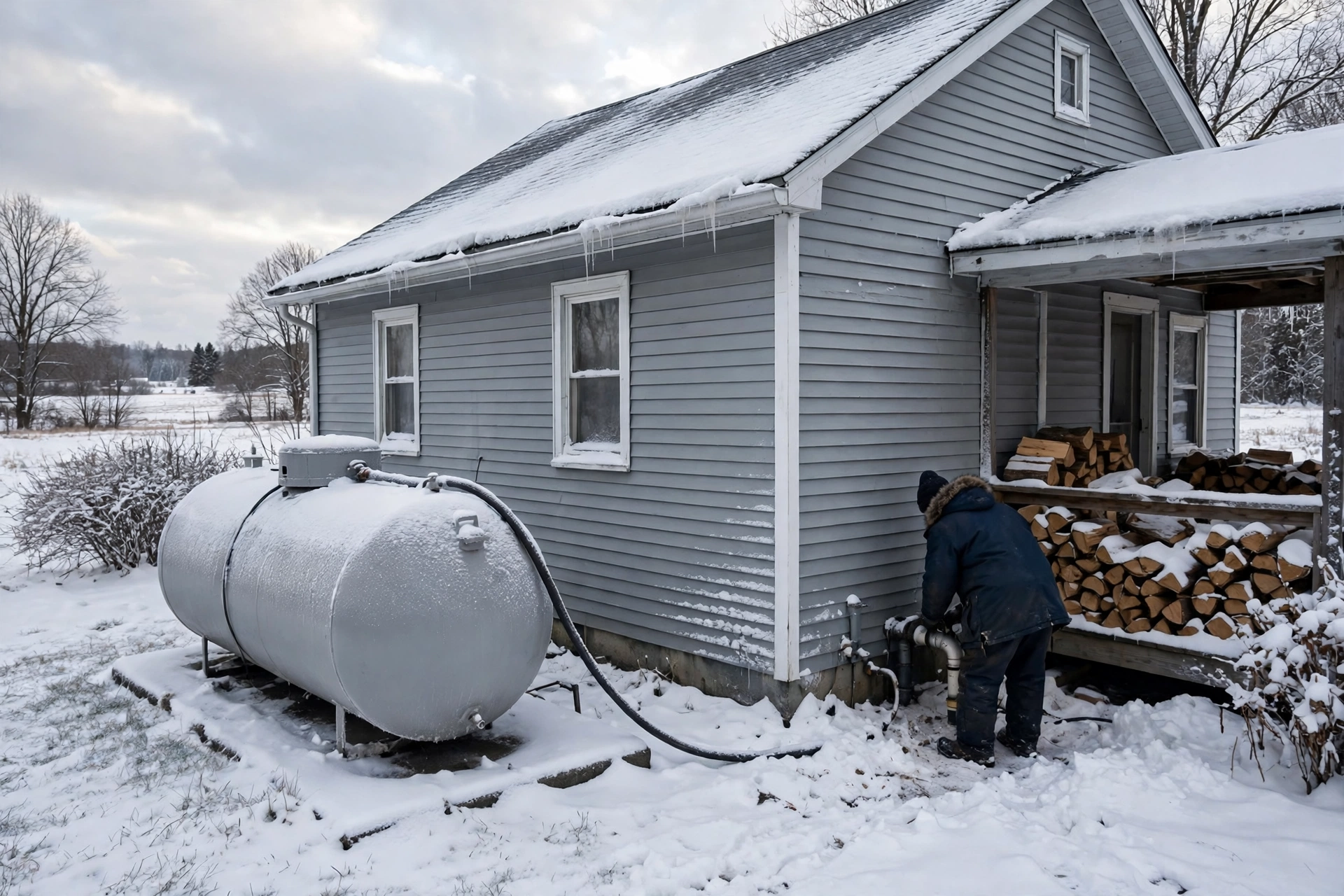
We service propane furnaces in rural homes around Appleton through the whole heating season. Call us when the heat falters, the furnace locks out, or the tank gauge raises a question, and we will trace the fuel path from tank to burner.
Propane heat when no gas line reaches you
A propane furnace works much like a natural gas furnace, with one key difference: the fuel arrives by truck and sits in a tank on the property. That makes the tank gauge part of the heating system. A furnace that locks out in January may have a burner problem, or it may simply be out of fuel, and checking the gauge first saves a service visit that finds an empty tank.
Propane burns hotter than natural gas, so burners, orifices, and gas pressure settings are specific to propane. A furnace converted from gas to propane, or back again, needs the right orifice size and pressure adjustment, or the flame will run wrong and soot will build. We check the conversion parts and pressure on every propane visit, especially on older units where a past conversion may not have been documented.
Tank placement and line routing matter in winter too. Lines that run above ground, regulators exposed to drifting snow, and vents near a tank fill path can all cause trouble during a storm. We look at the whole fuel path, not just the furnace cabinet, because a propane problem often starts outside the house.
Propane heat reaches homes past the gas main, and it asks more of the homeowner: tank level, delivery timing, and regulator condition are part of the heating system, not extras. In Buchanan and the rural towns around Appleton, we check the whole chain from tank to burner, because a fault anywhere in it feels like a furnace breakdown.
Propane vs natural gas
Propane, gas, and electric each reach homes differently. The comparison below shows delivery, fuel path, and the watch point for each.
| Fuel | Delivery | Watch point |
|---|---|---|
| Propane | Truck delivery to a tank on site | Gauge habits and storm access matter |
| Natural gas | Pipeline to the house | Line and meter capacity decide changes |
| Electric | Grid supply, no tank or vent | Panel capacity and element staging decide comfort |
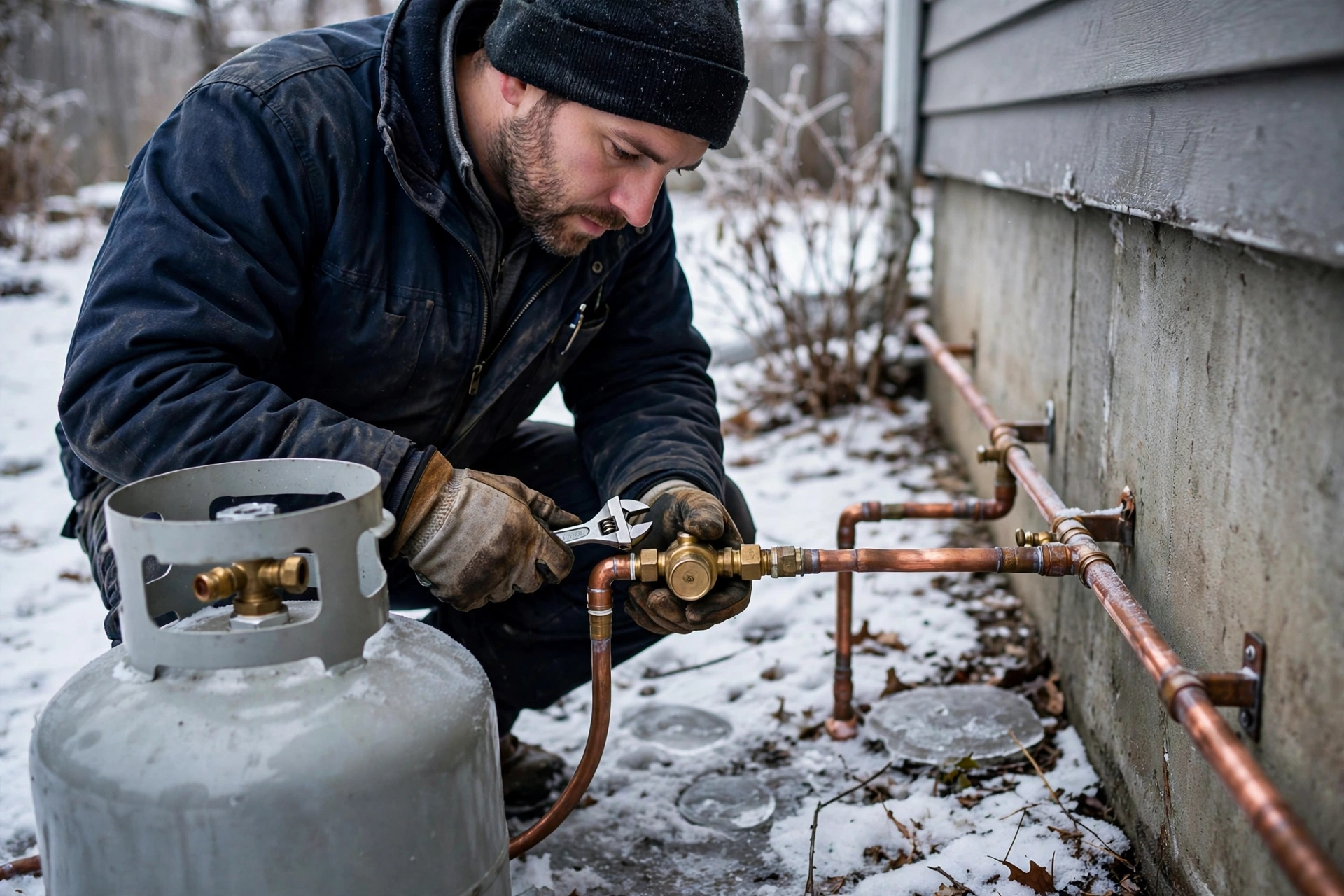
Propane work starts outside, at the tank and the regulator, before anyone touches the furnace. We check the regulator vent for ice and insects, the copper supply line for kinks and corrosion, and the shutoff for smooth operation, because a regulator that sticks or a line that leaks will mimic a furnace fault indoors. A manometer reading at the furnace valve then confirms the pressure matches the rating plate, following the installation instructions and NFPA 58 for liquefied petroleum gas systems.
The materials in a propane system are worth naming because each fails differently. The tank itself is welded steel, the supply line is usually copper with brass fittings at the joints, and the regulator uses a diaphragm and spring that stiffen with age and cold. A steel tank can outlast several regulators, while a copper line kinked during yard work can starve a furnace that otherwise runs fine.
Planning through a storm week
Storm weeks reward simple habits. Check the gauge before a forecast storm, not after the driveway fills with snow. Keep the tank area and the furnace vent clear, and know where the furnace switch and the thermostat sit so you can describe what the unit is doing if you need to call.
If the furnace locks out during a storm, note the gauge reading, whether the thermostat still calls for heat, and any blinking lights on the control board. That note helps us tell you whether the problem sounds like fuel, ignition, or venting, and whether a visit can wait for plowed roads or needs a sooner response.
Planning through a storm week means watching the gauge, keeping the tank access and the regulator vent clear of snow, and keeping the furnace area clear indoors. Those habits follow the tank maker's and the furnace maker's instructions, and they protect the regulator and burner that yearly maintenance tests before winter.
Propane furnace locking out or tank gauge looking low? Call Paper City Heating and tell us what the gauge reads.
Call (920) 523-4330 Contact UsTank, line, and furnace checks
A propane service visit starts outside. We note the tank level, look at the regulator and line for ice, damage, or corrosion, and check that the vent outlet is clear of snow. Inside, we test gas pressure at the furnace, inspect the burner and igniter, and check the heat exchanger and venting the same way we would on a gas unit.
Pressure tells a story that a visual check cannot. Low pressure may mean a regulator fault, a restricted line, or a tank running low. High pressure can overfire the burner and stress the heat exchanger. We measure pressure under load, while the furnace is firing, because a reading taken with the furnace off can look normal while the running pressure sags.
Delivery timing is part of propane care as well. A tank that drops low during a storm week may wait for a truck that cannot reach the driveway. We talk with families about gauge habits, driveway access in snow, and what to do if the furnace locks out on a weekend, so a storm does not turn a simple fuel question into a cold house.
Tank, line, and furnace checks belong together, and the furnace side follows the same lighting-chain testing as any gas unit: igniter, flame sensor, gas valve, and pressure switch in order. If the furnace is past sound repair, our installation page covers sizing for a propane home, and a gas furnace visit uses the same safety tests for homes on the gas main.
Winter storm readiness matters for propane homes. The National Weather Service posts winter safety guidance that helps families plan before a storm, not during it: winter safety guidance from the National Weather Service.
How a propane visit runs
Propane diagnosis moves from outside to inside, because the fuel path starts at the tank. Skipping the outside check and working only inside the cabinet misses half the system.
Check tank and line
We note the gauge, inspect the regulator and line, and clear snow or ice from vents and regulator vents.
Test pressure and burner
We measure gas pressure while the furnace fires, inspect the burner and igniter, and check flame quality.
Inspect safety controls
We test limit controls, pressure switches, and carbon monoxide levels, and we inspect the heat exchanger.
Run and confirm
We run several heating cycles, confirm steady flame and warm air at registers, and note the tank level for you.
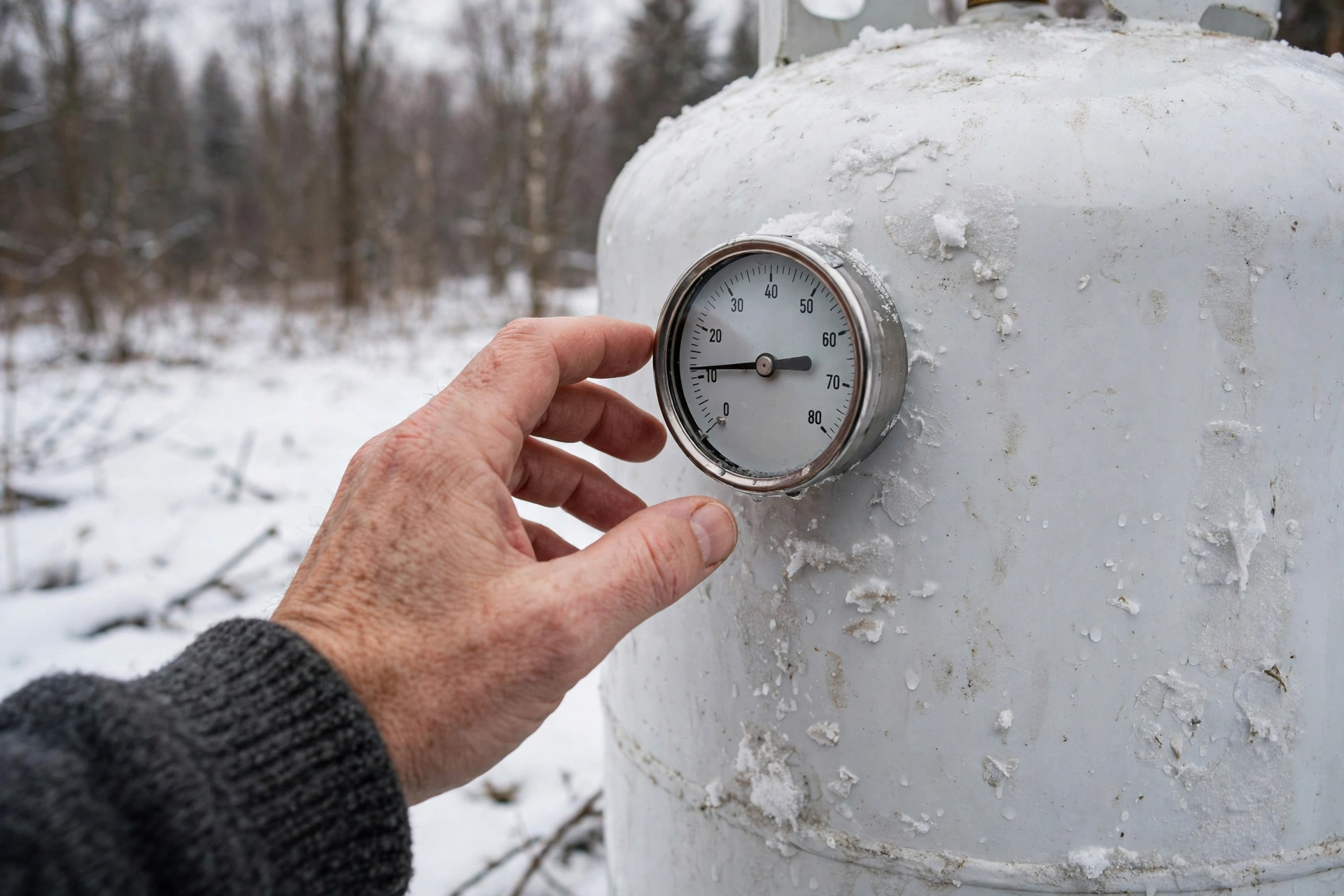
The tank gauge is the simplest diagnostic on a propane system and the most overlooked. A furnace that runs, then stops, then runs again may simply be running low, and cold weather makes the gauge read lower than the usable fuel suggests. We note the gauge reading on every visit, and we remind homeowners to watch it through storm weeks, when delivery trucks cannot always reach rural roads, which is the planning our storm planning guide walks through.
What a propane visit feels like
A propane visit starts outside, in all weather. We check the gauge, the regulator, and the line before we step inside, because the fuel path starts at the tank. A regulator iced over, a line kinked by snow, or a gauge reading low each change the diagnosis completely. Families sometimes apologize for the snow on the path. We would rather walk a snowy path and find the real cause than work inside and miss it.
Inside, pressure testing under load is the key step. A pressure reading taken with the furnace off can look fine while the running pressure sags under demand. We measure while the burner fires, and we compare that reading to what the furnace needs. That comparison separates a regulator fault from a burner fault, and it keeps us from replacing a good burner for a weak regulator.
After the fix, we note the tank level for you and talk about gauge habits for the weeks ahead. A tank that reads low before a storm deserves a delivery call, not a hope that the storm passes quickly. That conversation, five minutes at the end of a visit, prevents more cold nights than any single part we replace.
We also check the furnace vent outlet after snow on every propane visit in winter, because a buried outlet trips the same lockout as a fuel fault. Clearing snow from the outlet is a homeowner habit worth building, and we show you where the outlet sits so you can check it after a storm. A quick look after heavy snow takes a minute and prevents a lockout that feels like a breakdown but is really just a buried vent. That habit is worth building before the first big storm of the season.
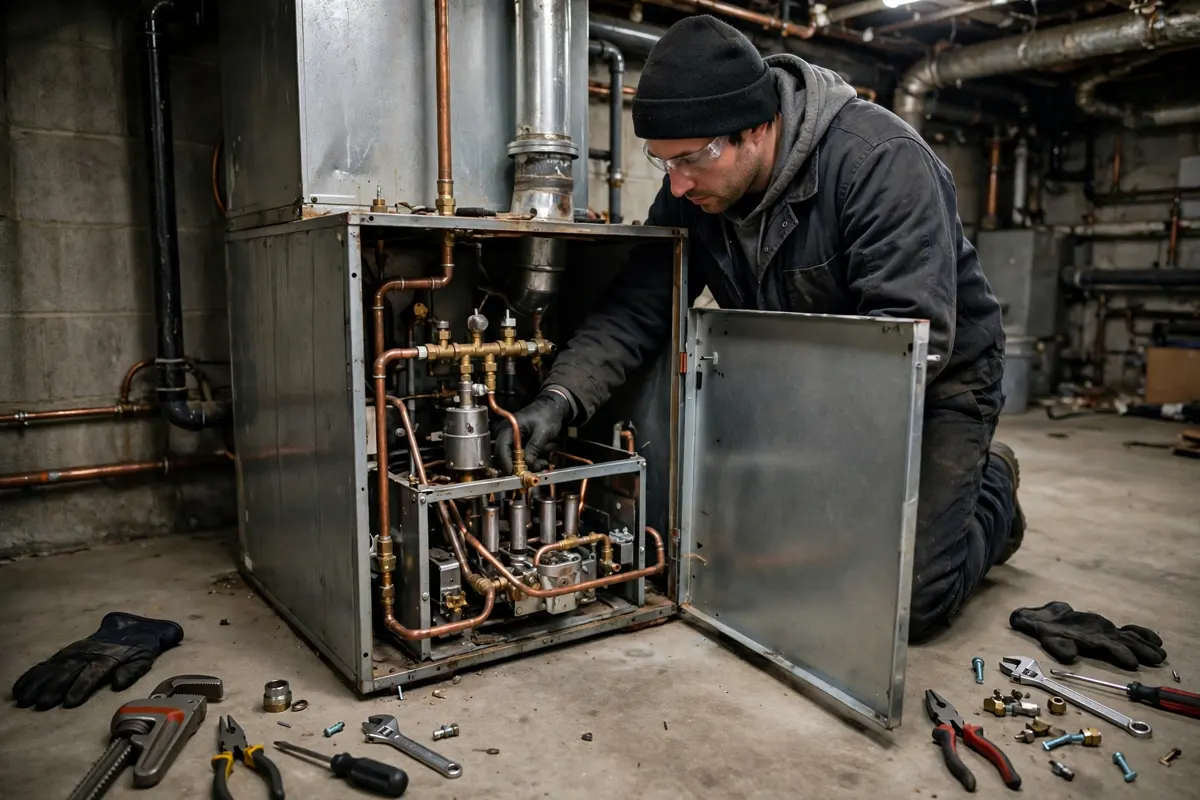
The first check starts outside at the tank
Propane work starts outside, at the tank. Gauge, regulator, and line condition shape the whole diagnosis, and skipping that outside check misses half the system.
Pressure testing under load comes next, while the burner fires. A resting pressure reading can look fine while running pressure sags, and that sag is often the real fault behind a lockout.
Questions homeowners ask about propane furnace services
Why does my propane furnace keep locking out?
Lockouts often trace to low tank level, a regulator fault, a blocked vent, or an ignition or flame sensing failure. Check the tank gauge first, then note how many lighting tries the furnace made. Testing fuel pressure while the unit fires finds most propane lockout causes.
How do I know if my propane tank is too low?
Most tanks carry a gauge that reads as a percentage of capacity. A reading in the low range during winter deserves a delivery call before a storm, because trucks may not reach every driveway during heavy snow. Keep the gauge in your regular winter routine.
Can a propane furnace run during a power outage?
A propane furnace still needs electricity for the blower, controls, and ignition, so it stops when the power goes out unless a backup source runs those parts. The tank holds fuel, but the furnace cannot move heat without power. Plan for that gap before storm season.
Signs of propane furnace trouble
A furnace that runs, stops, and locks out after a few tries may be starved for fuel, suffering from a regulator fault, or dealing with a burner or ignition problem. Note whether the tank gauge reads low, whether other propane appliances still work, and whether the lockout started after a delivery or a storm. Those details narrow the search fast.
Soot, a yellow flame, or a smell around the furnace all deserve a prompt visit. Propane soot builds on burners and heat exchangers when combustion is off, and it insulates the metal it coats, which makes the problem worse over time. A regulator that ices up can also starve the burner and cause a weak, lifting flame. None of these are problems to run through for a week.
Gurgling, hissing, or a strong propane smell near the tank or line is a different matter. Leave the area, do not operate switches or phones near the smell, and call your propane supplier or emergency services from a safe distance. A leak check comes before any furnace work in that case, and it comes from the supplier or a qualified responder, not from a restart attempt.
Common questions about propane furnace services
What should I do if I smell propane?
Leave the area, avoid switches and phones near the smell, and call your propane supplier or emergency services from a safe distance. Do not restart appliances until the leak has been found and fixed by a qualified responder.
Why is my propane flame yellow?
A yellow or lazy flame can mean wrong gas pressure, a wrong orifice, a dirty burner, or restricted air. Propane burners need the correct orifice and pressure, or combustion runs dirty and soot builds. A visit should check pressure and burner condition together.
Does propane need a different furnace than natural gas?
The furnace cabinet may be the same, but the burner orifice, gas valve setting, and pressure must match propane. A conversion kit and a pressure test make that change, and the work should be documented so the next technician knows what was done.
How often should a propane furnace be serviced?
Once a year before heating season, covering burner, pressure, venting, safety controls, and carbon monoxide. Tank and regulator condition get checked at the same visit, because the fuel path outside affects the furnace inside.
What if my tank runs empty in winter?
An empty tank can let air into the line, and the system may need purging and a leak check before the furnace runs again. Call your supplier for delivery and ask about a system check after refill, rather than restarting the furnace repeatedly.
Is propane heat safe?
Propane heat is safe when the tank, line, regulator, burner, and venting are maintained and alarms are in place. Yearly service, a working carbon monoxide alarm, and a habit of checking the gauge keep the system sound through winter.
Related services
Talk to Paper City Heating
Call us at (920) 523-4330 or email [email protected] about your propane furnace, including tank and regulator concerns. We will check fuel supply and the furnace together and explain the findings plainly.
Call (920) 523-4330 Contact UsLast updated: October 31, 2026