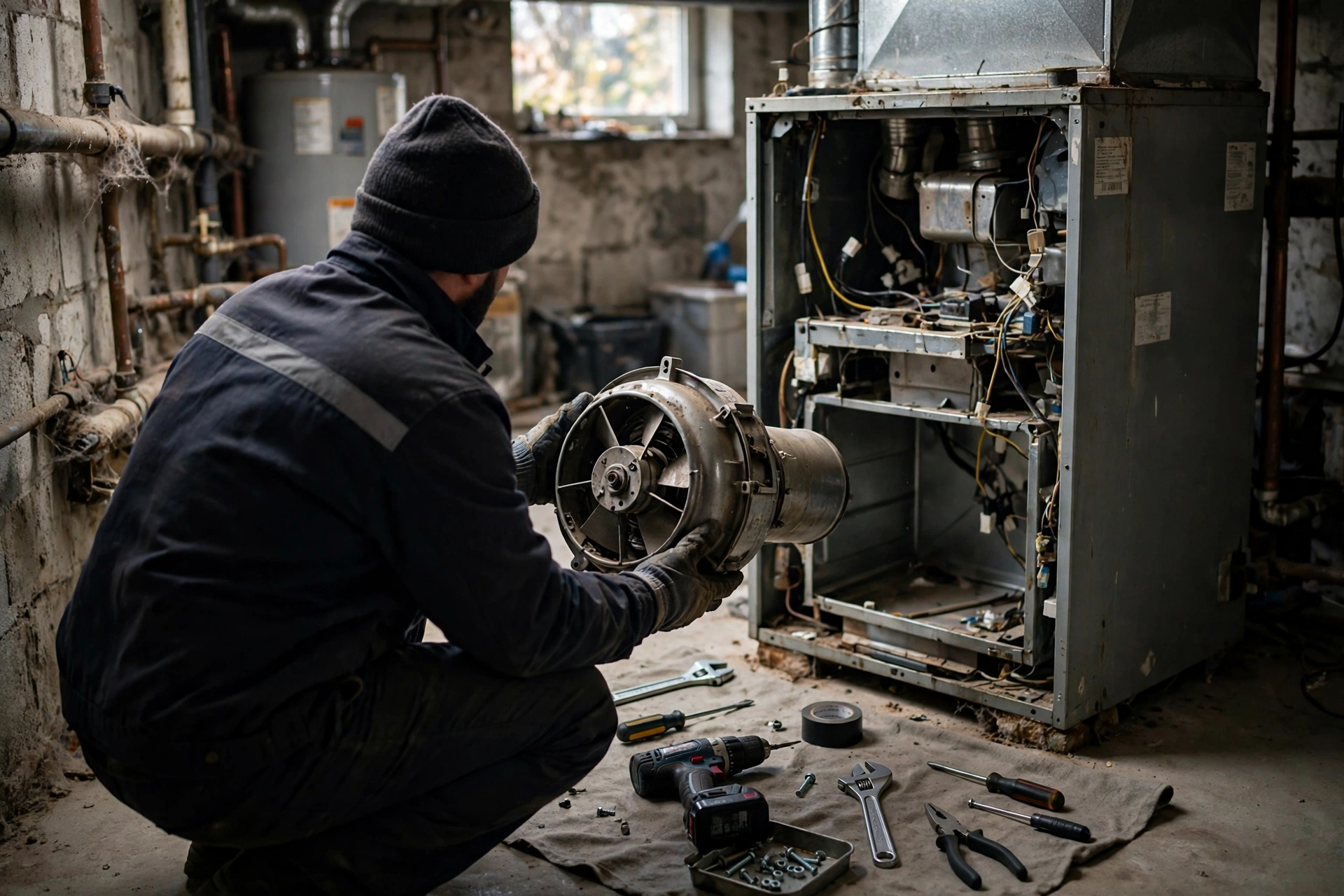
Call us when the air feels weak, the blower squeals or hums without starting, or the furnace runs but rooms stay uneven. We test the motor, capacitor, wheel, and controls before we recommend a repair or a replacement.
Sounds and symptoms that point to the blower
A squeal that rises when the blower starts often means a dry or worn bearing. A hum with no spin often means a failed capacitor or a motor that cannot start under load. A rattle that changes with fan speed often means a loose wheel, a loose panel, or debris in the housing. Each sound points to a different part, and describing it accurately helps us bring the right parts on the first visit.
Weak airflow is quieter evidence. Registers that barely move a tissue, rooms far from the furnace that stay cold, or a furnace that heats well on mild days but falls behind in cold weather can all trace to a blower running slow, a wheel clogged with dust, or a duct restriction. We measure airflow at registers and check static pressure where we can, so we do not replace a motor for a duct problem.
A blower that never stops, or that stops and starts in short bursts, usually points to a control or thermostat issue rather than the motor itself. A fan limit control stuck on, a thermostat fan setting left on continuous, or a control board relay sticking can each hold the blower on. We test the control chain before we condemn the motor, because a new motor will not fix a stuck relay.
What a blower visit feels like
A blower visit starts with sound. We listen at startup, at full speed, and at shutdown, because each phase stresses different parts. A squeal at startup points to bearings. A hum without spin points to a capacitor. A rattle at full speed points to a loose wheel or panel. Describing the sound before we arrive helps, but hearing it ourselves confirms it, and confirmation is what a good repair rests on.
With the power off, we spin the wheel by hand and feel for roughness, wobble, and drag. A smooth wheel spins freely and stops gradually. A rough wheel catches, wobbles, or stops short. That hand test, simple as it sounds, tells us more about bearing condition than any meter reading, and it takes less than a minute. We do it on every blower visit, even when the fault already looks obvious.
After cleaning or replacement, we measure temperature rise and airflow at registers. Those two readings confirm the blower is moving enough air without moving so much that rooms feel drafty. A blower that sounds right but moves too little air has not been fixed yet. The readings, not the sound alone, close the job.
We also check the filter and returns on every blower visit, because a blower cannot move air it cannot draw. A clogged filter or a blocked return strains a new motor just as it strained the old one, and fixing the airflow protects the repair. That check is part of the job, not an extra.
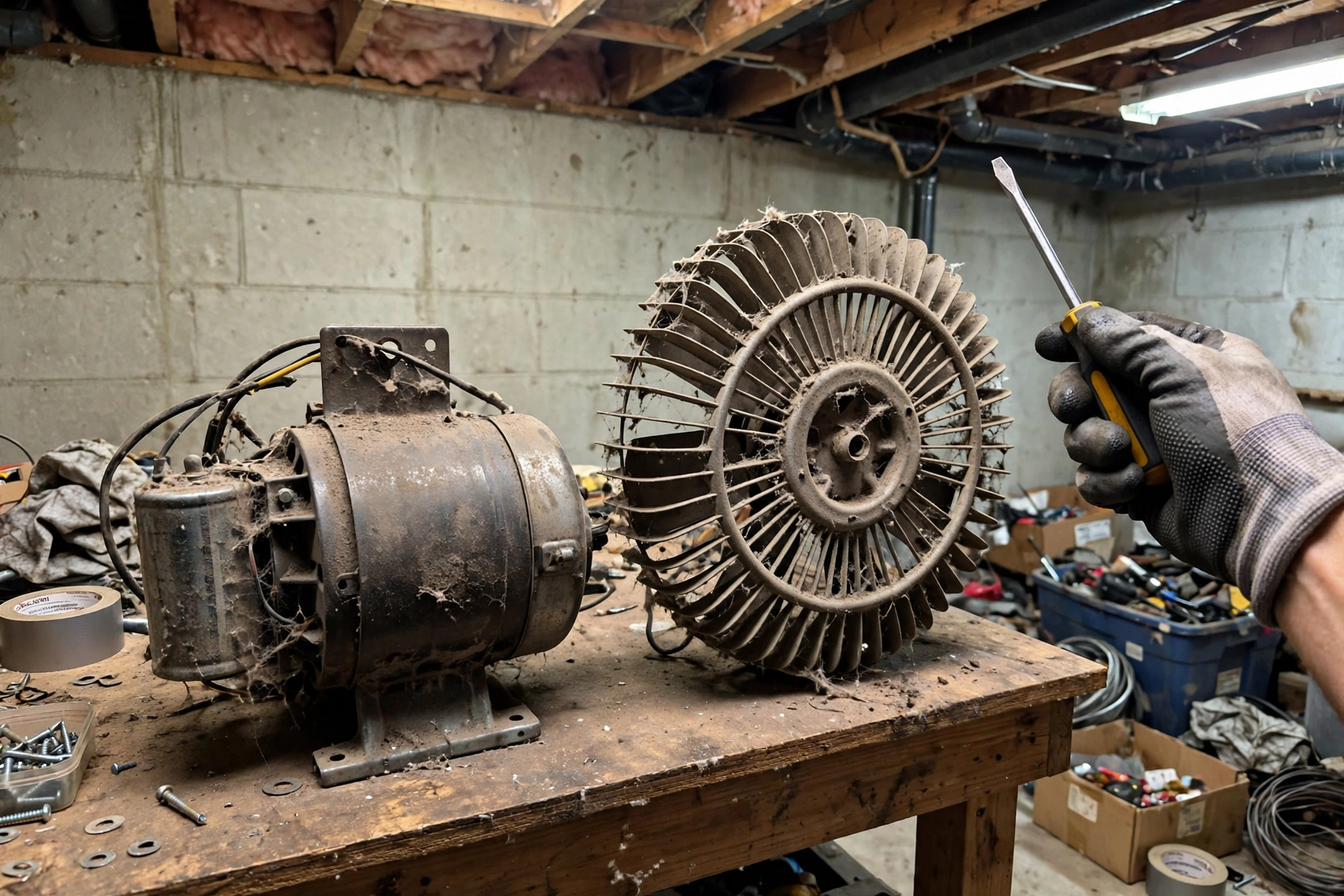
A blower motor rarely fails without warning, and the parts tell the story before the motor stops. The motor, capacitor, and squirrel-cage wheel work as one assembly: a weak capacitor leaves the motor humming instead of starting, while a wheel packed with lint throws the assembly off balance. We check amp draw with a clamp meter and spin the wheel by hand before deciding whether cleaning, a capacitor, or a motor swap is the honest fix, and the same airflow check that guides our ductwork and airflow work tells us whether the ducts are starving the blower.
Airflow and filter habits affect blower life more than most families expect. The Department of Energy covers filter and airflow basics in its heating maintenance guidance: home heating guidance from the Department of Energy.
Blower squealing, humming, or barely moving air? Call Paper City Heating and describe the sound.
Call (920) 523-4330 Contact UsHow a blower repair visit runs
Blower diagnosis is hands on work. A meter reading, a hand spin of the wheel, and a listen at startup together tell us more than any single test alone.
Test motor and capacitor
We check capacitor strength, motor current draw, and winding condition, and we spin the wheel by hand to feel bearing condition.
Inspect wheel and housing
We look for dust buildup, balance problems, loose set screws, and debris in the blower housing.
Check controls
We test the fan relay, limit control, and thermostat fan wiring to rule out a control fault.
Repair and recheck airflow
We clean or replace what failed, run the blower at each speed, and confirm airflow and temperature rise at registers.
Keeping a new blower healthy
A clean filter is the cheapest blower care there is. Dust that reaches the wheel coats the blades, unbalances the spin, and forces the motor to work harder for the same air. Check the filter monthly in heating season and change it when it looks grey and clogged, not on a fixed date that ignores how dusty the house has been.
Keep return grilles open and unblocked. Furniture, rugs, and storage boxes over a return starve the blower, and the motor labors against a restriction it cannot fix. A blower that runs against blocked returns overheats, trips limits, and wears bearings faster. A quick walk through the house to clear returns takes minutes and adds seasons to a motor.
Between visits, the habits that protect a blower are simple: change the filter on schedule, keep return grilles uncovered, and keep the area around the furnace clear of stored boxes. Those habits follow the furnace maker's instructions for airflow, and they keep dust out of the wheel that a heat exchanger inspection would otherwise find caked in place.
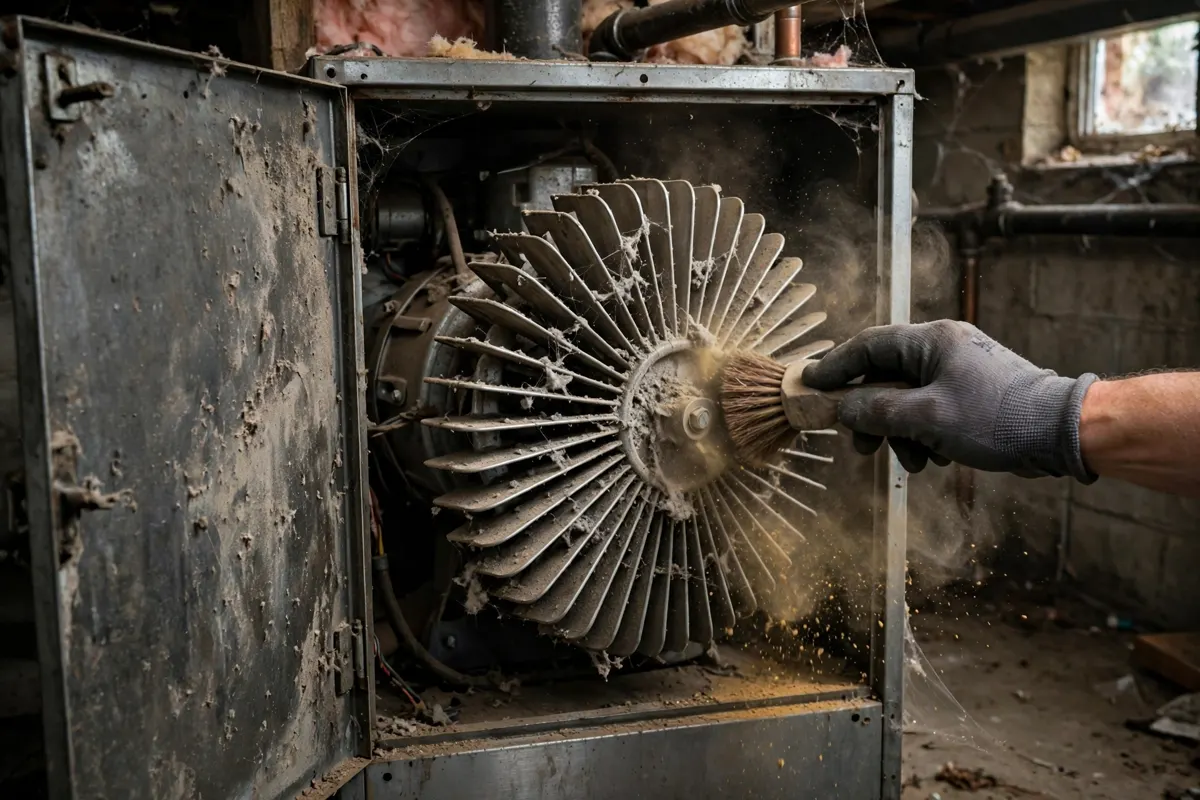
A blower check starts with a listen
Blower work starts with listening. Startup, full speed, and shutdown each stress different parts, and each sound points to a different fault. Hearing the blower ourselves confirms what a description can only suggest.
Hand testing follows, with the power off. Spinning the wheel by hand reveals bearing roughness and wobble that a meter cannot feel, and it takes less than a minute. That simple test sits at the center of every blower visit.
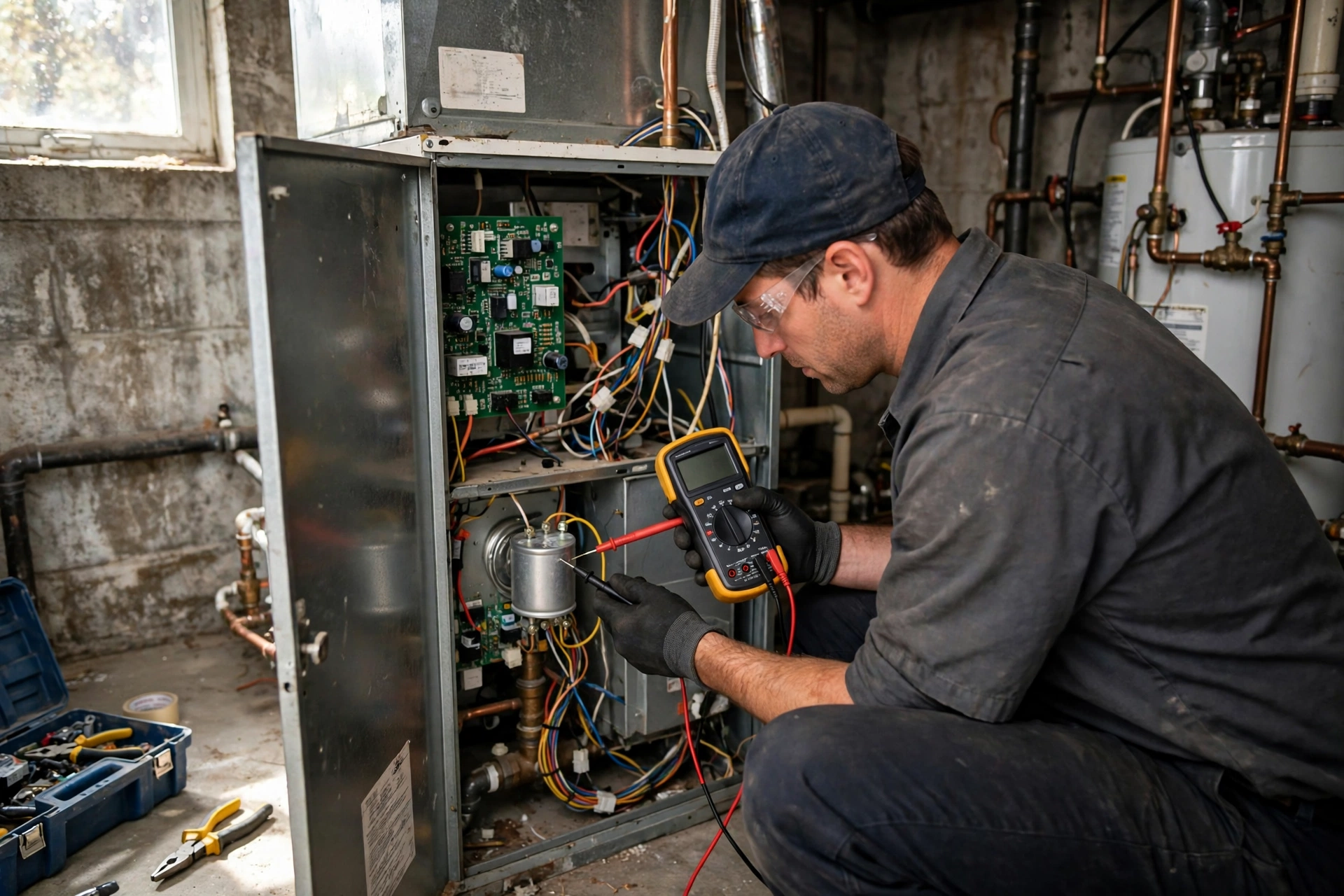
Testing beats guessing with blower parts. A multimeter and a capacitor tester show whether the run capacitor still holds its rating, and the motor nameplate gives the rating the replacement must match. Copper windings, steel housings, and sleeve or ball bearings differ from one motor to the next, so we match the part to the furnace maker's specification rather than fitting whatever happens to be on the shelf.
Blower motor types compared
Blower motors differ in how they run and how they fail. The comparison below matches motor type to its usual fault, so a symptom points to a part.
| Motor type | How it runs | Common fault |
|---|---|---|
| Permanent split capacitor | Set speeds, capacitor start | Failed capacitor, worn bearings |
| Electronically commutated | Adjusts speed in steps | Control module or module wiring fault |
| Variable speed | Long gentle runs, even rooms | Sensor or control communication fault |
Repair, clean, or replace the motor
Cleaning and a capacitor change fix a large share of blower complaints. A wheel cleaned of dust moves more air at the same motor speed. A fresh capacitor lets a struggling motor start cleanly and run without humming. Bearings that can be oiled get oiled, and loose set screws get tightened. These are small jobs, and we say so when they are enough.
Replacement makes sense when the motor windings test bad, the bearings are rough and noisy after cleaning, or the motor draws far more current than its rating. A motor that has overheated repeatedly, or one with a burned smell that returns after cleaning, is not a candidate for another season of patching. We match the replacement by horsepower, speed, rotation, and frame, because a close enough motor that spins the wrong way or runs the wrong speed creates a new problem.
After any blower work, we recheck airflow and temperature rise. Temperature rise is the difference between return air and supply air, and it tells us whether the furnace is moving enough air across the heat exchanger or elements. Too little airflow overheats the unit. Too much airflow feels drafty and can shorten heating cycles. The recheck confirms the repair did what it was supposed to do.
When cleaning and a capacitor do not restore steady airflow, replacement is the next conversation, and it pairs naturally with a yearly tune-up that keeps the new wheel clean. A motor that runs hot because of a clogged filter or a crushed flex duct will wear out its replacement too, so we look at the return path before closing the cabinet, and our tune-up checklist walks through what that visit covers.
Questions homeowners ask about blower motor repair
Why is my furnace blower so loud?
A loud blower often means worn bearings, a wheel out of balance, a loose set screw, or debris in the housing. A squeal points to bearings. A rattle points to something loose. A roar can mean the wheel is clogged or the motor is running against blocked airflow.
Can a blower motor be repaired or must it be replaced?
Many blower problems are repairs: a failed capacitor, a dirty wheel, a loose wheel, or a control fault. Replacement fits when windings test bad, bearings stay rough after cleaning, or current draw sits far above rating. Testing decides which path fits.
Why does my blower run but no warm air comes out?
A running blower with cold air can mean the burner or elements never fired, a limit opened, or the thermostat calls for fan only. Check the thermostat setting first, then have the heating chain and the blower tested together, because the two systems share controls.
What the blower motor actually does
The blower motor spins a wheel, sometimes called a squirrel cage, that pulls return air through the furnace and pushes warmed air into the supply ducts. On a gas or propane furnace, it also moves air across the heat exchanger, which keeps that metal from overheating. On an electric furnace, it moves air across the elements for the same reason. Without the blower, heat stays trapped in the cabinet and the safety limit shuts the furnace down.
Motor wiring follows the manufacturer's specifications and the national electrical code, so a replacement motor is matched to the furnace's voltage, rotation, and mounting before it is fitted.
Blower motors come in a few common forms. Older permanent split capacitor motors run at set speeds and use a capacitor to start and run. Newer electronically commutated motors adjust speed in finer steps and use less power at low speed. Variable speed blowers can run long and gentle, which evens out room temperatures and keeps air moving between heating cycles. The motor type decides how we test it and what a replacement involves, so we identify it before we quote any work.
The blower wheel matters as much as the motor. A wheel coated in dust and lint moves less air even when the motor spins at full speed. A wheel out of balance wobbles, wears bearings, and makes noise that grows over a season. Cleaning the wheel, checking its balance, and clearing the cabinet around it are part of a proper blower visit, not extras added on.
Methods matter here: we measure static pressure across the filter and coil, listen for bearing noise at several speeds, and watch how the motor behaves through a full heating cycle. When a blower in Grand Chute or Appleton keeps tripping its thermal overload, the cause is often restricted return air, not a motor that was weak from the start.
Common questions about blower motor repair
What is a blower capacitor?
A capacitor stores a charge that helps the motor start and run smoothly. When it weakens, the motor may hum without starting, start slowly, or run hot. Testing the capacitor with a meter shows whether it still holds its rated value.
How long should a blower motor last?
Life depends on run hours, dust, and airflow, so no single number fits every home. Motors in clean systems with open returns and regular filter changes tend to last longer than motors that run against clogged filters and blocked returns year after year.
Why does my blower keep running after the heat stops?
A blower often runs a short time after the burner stops to push remaining warm air out of the ducts. A blower that runs for hours usually means a fan setting, a stuck relay, or a limit control holding it on, and that control chain needs testing.
Can I oil my blower motor myself?
Some older motors have oil ports, while many newer motors use sealed bearings that need no oil. Adding oil to a sealed motor does not help it. We check the motor type during a visit and oil only the ports that are meant to be oiled.
Why are some rooms cold when the blower runs?
Cold rooms with a running blower can mean duct restrictions, closed dampers, a clogged wheel, or a motor running slow. We check airflow room by room, because a blower problem and a duct problem feel the same from a chair in a cold room.
Does a variable speed blower save energy?
A variable speed blower can use less power at low speed and run longer, gentler cycles that even out room temperatures. Savings depend on the house, the duct system, and how the thermostat is set, so we describe the effect for your home rather than promising a general result.
Related services
Talk to Paper City Heating
Call us at (920) 523-4330 or email [email protected] and describe the airflow trouble: weak rooms, new noises, a motor that hums. We will test the blower and motor in order and explain what we find.
Call (920) 523-4330 Contact UsLast updated: October 31, 2026