By Paper City Heating
Last updated: October 31, 2026
A rural propane home heats differently from a city gas home, because the fuel arrives by truck, not by pipe. That single difference shapes everything about winter planning: when to order, how low to let the tank run, what a storm does to delivery, and what to do when the furnace and the tank both need attention at once. In the rural parts of Outagamie and Calumet counties, where homes sit farther apart and roads drift shut in wind, a propane plan is a safety plan, not just a shopping list. See propane furnace services.
This post covers delivery timing, tank checks, storm routines, and furnace care for propane homes, without inventing delivery promises or timelines that belong to your supplier. Your propane supplier sets delivery schedules and minimums, and this post helps you work with that schedule, not around it. The goal is simple: never let a storm week become a fuel emergency, and never let a furnace fault hide behind a tank question.
How rural propane delivery actually works
Propane delivery runs on routes, not on demand. A supplier plans truck routes by area, tank size, and usage history, and fills tanks on a schedule or when a customer calls, depending on the plan you hold. Rural routes take longer, since trucks cover more miles between stops, and a storm can push a whole route back by days. That is why suppliers ask customers to order early and to keep tanks above a safe level through winter, rather than waiting until the gauge reads low. See gas furnace services.
Your gauge is your planning tool. Learn to read it, check it weekly in winter, and note how fast it drops in cold weeks versus mild weeks. A tank that drops slowly in November can drop fast in a January cold snap, when the furnace runs for hours at a time. Keep a written log of gauge readings and delivery dates, and share that log with your supplier if usage seems off. A sudden jump in usage can point to a furnace fault, a thermostat problem, or a leak, and early notice helps both the supplier and a heating technician sort it.
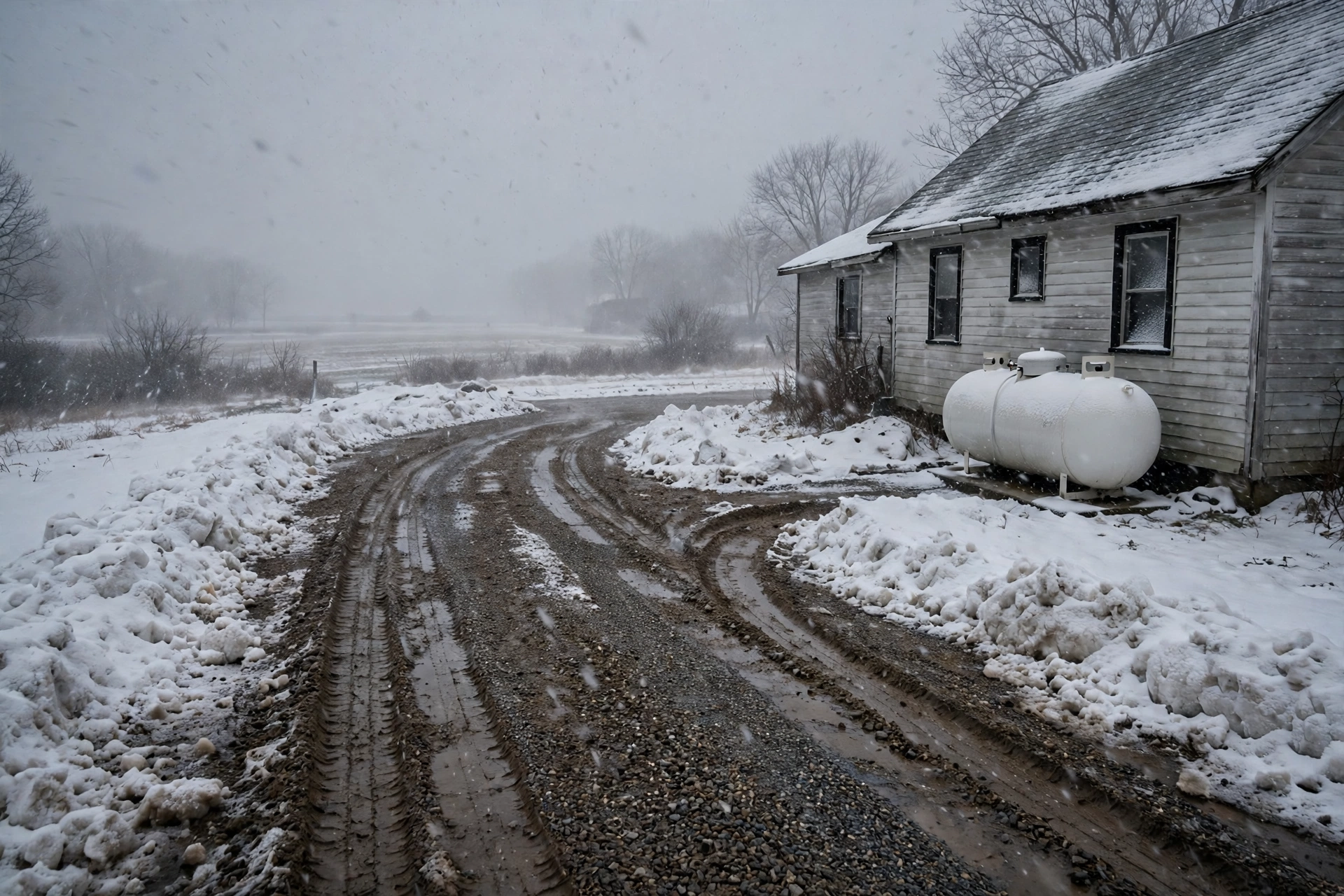
A plowed drive to the tank is what makes a storm-week delivery possible. The truck needs the same clear path the furnace needs clear vents: planned, not improvised.
Ordering before storms, not during them
Order propane before a forecast storm, not when the storm arrives. The National Weather Service office in Green Bay posts winter storm outlooks for our area, and a storm watch is your signal to check the gauge and call if the level is getting low. Trucks cannot safely run rural roads in whiteout wind, drifting snow, or ice, and a delivery ordered during a storm may wait until roads clear and routes reopen. Ordering early also helps the supplier plan the route, since a truck that can fill several rural tanks in one run serves more homes than a truck making single emergency stops.
Keep the tank access clear all winter. Plow or shovel a path to the tank, keep the fill connection clear of snow and ice, and mark the tank location with a tall marker so a driver can find it in deep snow. Low branches, a soft driveway, or a gate that freezes shut can all delay a delivery, and those are easy to fix in fall. Tell your supplier about driveway limits, weight limits, or turnaround problems before winter, so the route plan reflects your property, not a guess.
Rural propane home heading into a storm week?
Check the gauge, clear the tank path, and call early, before roads and routes close.
Call (920) 523-4330 Contact us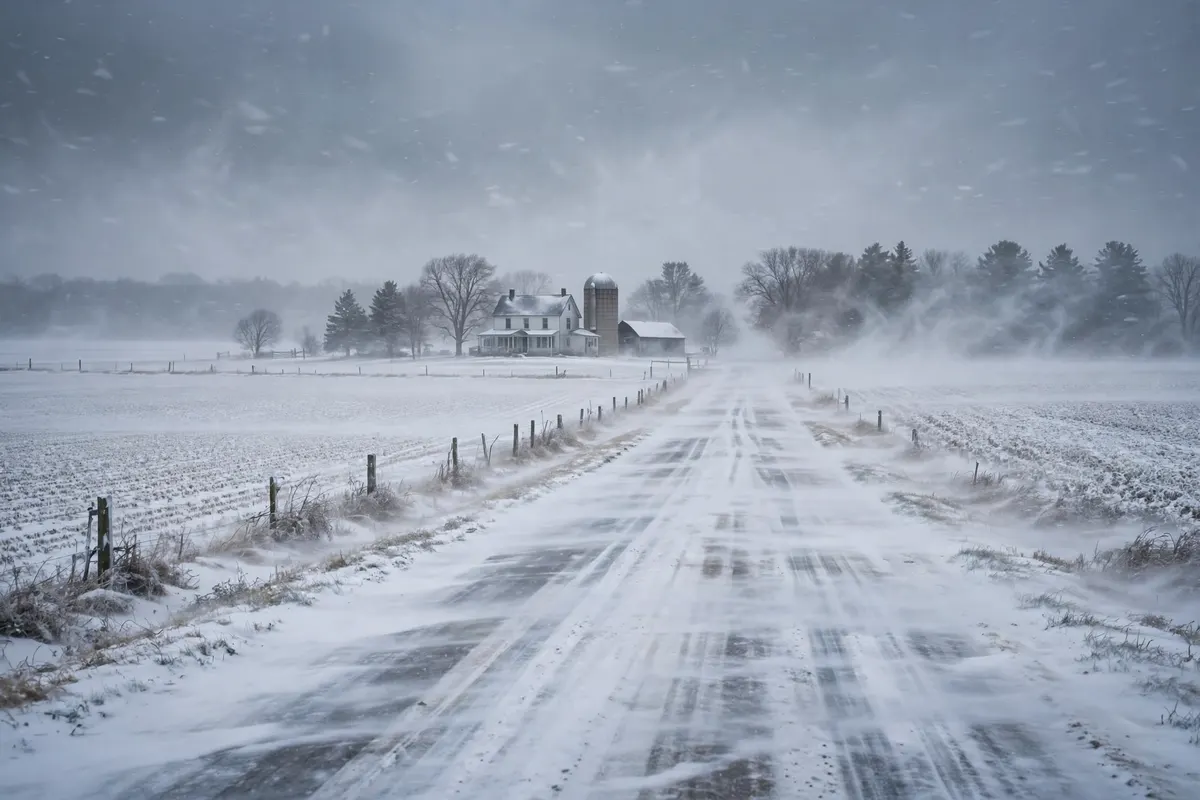
A rural road in a snowstorm shows why propane planning starts before the storm. Trucks cannot safely run drifted rural roads, so an early order beats an emergency call during whiteout wind.
Tank checks you can make safely
Walk the tank area monthly in winter and look for the safe, visible signs: snow piled against the tank, ice on the regulator or fill connection, a leaning tank pad, or a smell of gas near the tank. Do not try to repair a regulator, a valve, or a line yourself, and do not use a flame to melt ice on tank equipment. If you smell gas near the tank, leave the area, do not switch electrical equipment nearby, and call your supplier and emergency help from a safe distance. A gas smell outdoors still deserves fast, outside help.
Check the gauge and the tank pad after storms, and note any damage from plows or falling branches. A tank that shifts on its pad, or a line that looks bent or exposed, needs a supplier visit before the next delivery. Inside, the same furnace care applies as for any propane home: clean filter, open registers, clear vents, and a fall visit that checks ignition, flame, and safety controls. Propane furnaces need the same attention as gas furnaces, plus the fuel planning that a piped gas home never thinks about.
Storm week furnace care for propane homes
During a storm week, run the furnace steadily rather than setting it back sharply at night, since recovery after a deep setback burns more fuel and strains a furnace that is already working hard. Keep interior doors open for circulation, protect pipes on outside walls, and check outdoor vent ends after snow, since drifts can bury a vent just as they can block a tank path. If the furnace stops, check the thermostat, filter, and vent wall first, and check the tank gauge second, so you can tell a technician and your supplier which problem you face.
Plan a backup warm room for a true outage, with blankets, a flashlight, and a way to contact help, but never use a grill, a gas oven, or a generator indoors for heat. A generator, if you have one, belongs outside, far from windows and vents, and it should power only what it is rated for. Keep phones charged before a storm, and keep supplier and heating numbers where you can find them in the dark. A storm week plan written in fall is easy to follow in January, and a plan invented during a whiteout is not a plan at all.
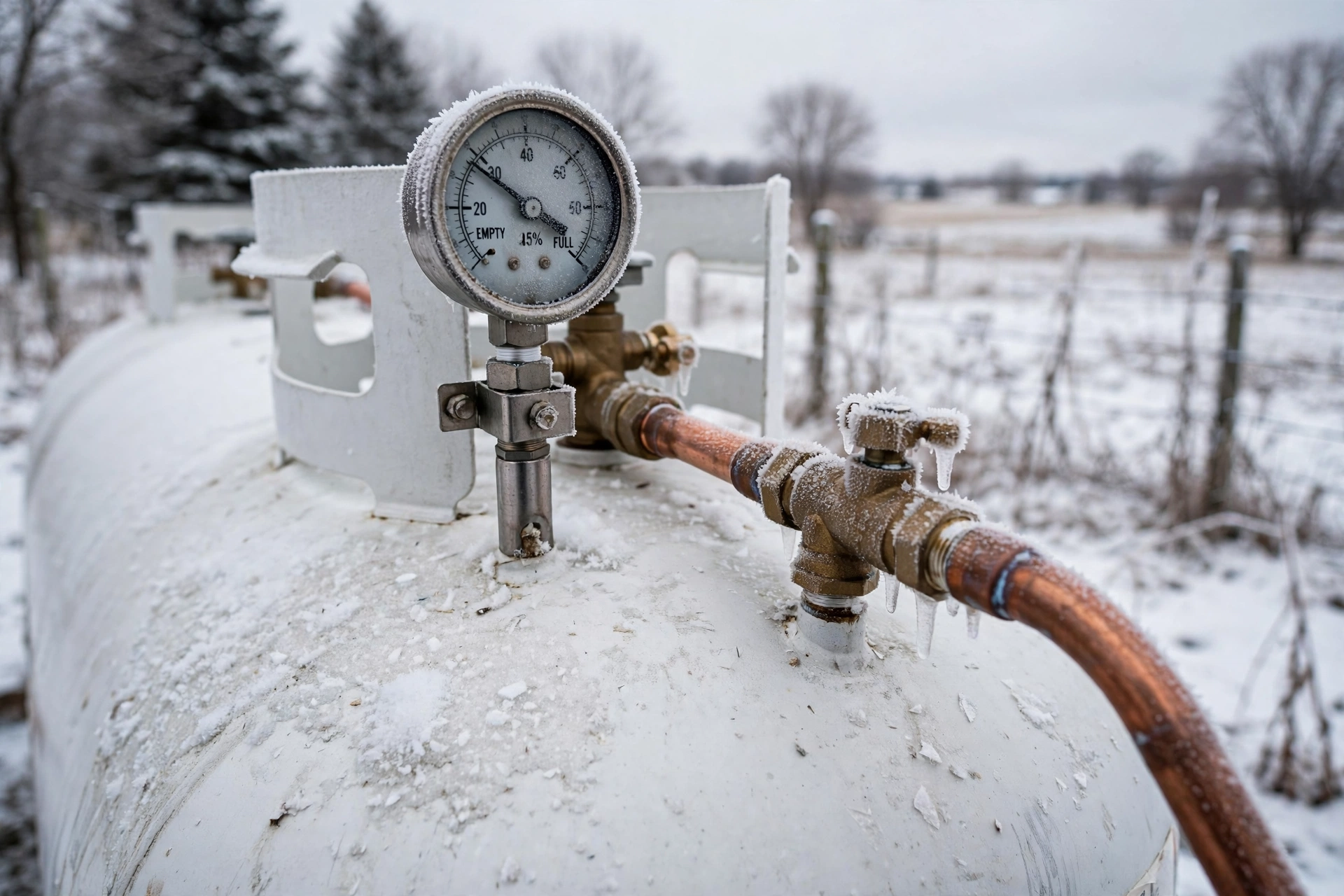
The tank gauge in winter is a planning tool, not a decoration. Read it before the storm week, not during it, and order while a truck can still reach the tank.
When to call the supplier, and when to call us
Call your propane supplier for gauge, delivery, tank, regulator, and line questions, and for any gas smell near the tank. Call us for furnace questions: ignition, flame, airflow, venting, thermostat, and rooms that lag while the furnace runs. When both problems appear at once, a low tank and a furnace fault, call both, and tell each one what the other problem is, so neither visit wastes a trip. A furnace cannot run without fuel, and a full tank cannot fix a failed igniter, so sorting the two together saves time in a storm week.
Keep a simple winter log: gauge readings, delivery dates, furnace visit dates, filter changes, and any fault you noticed. That log helps a supplier spot usage changes, helps a technician spot furnace patterns, and helps you plan the next order before a storm. Rural propane heating rewards steady habits: check weekly, order early, keep access clear, and call early when something changes. Those habits carry a rural home through Outagamie and Calumet winters with far fewer surprises.
Keeping the tank approach clear for the delivery truck
A propane delivery truck needs a clear path to the tank, and winter is when that path disappears. Snow from the plow, a drift across the drive, or a gate frozen shut can turn a routine delivery into a missed stop, especially on rural roads where the truck may not pass again for days. Marking the tank location with tall stakes before the first snow helps the driver find it under a drift, and keeping the drive plowed to the tank pad matters as much as keeping it plowed to the house. See Freedom furnace help.
Tell your supplier about anything that changes access: a soft shoulder after thaw, a low branch over the drive, a dog that runs loose, or a gate code that changed. Drivers work long rural routes in bad weather, and a short note about access saves a wasted trip. After each storm, walk the route yourself and clear what the plow left behind, so the next delivery reaches the tank without delay.
Rural propane questions for storm season
When should I order propane before a storm?
Order as soon as a storm watch appears and your gauge is getting low, not when the storm arrives. Trucks cannot safely run rural roads in whiteout wind, drifting snow, or ice, and a delivery ordered during a storm may wait until roads clear. Early orders also help suppliers plan efficient rural routes.
How often should I check my propane gauge in winter?
Check the gauge weekly through winter, and more often during cold snaps, when furnace run times rise fast. Keep a written log of readings and delivery dates, since a sudden jump in usage can point to a furnace fault or a leak. Share that log with your supplier if usage seems off.
What should I do if I smell gas near my propane tank?
Leave the area right away, do not switch electrical equipment nearby, and call your supplier and emergency help from a safe distance. Do not try to repair a regulator, valve, or line yourself, and never use a flame to melt ice on tank equipment. A gas smell outdoors still deserves fast outside help.
Propane parts: gauge, regulator, and copper line
A rural propane system is a short list of parts with long consequences: a steel tank, a float gauge, a two-stage brass regulator, and a copper supply line into the house. The tools that keep it honest are a gauge reading, a leak-detection solution at the fittings, and a manometer at the furnace, and the supplier owns the tank side while we own the furnace side. That split is why propane furnace service starts with a question about tank level before any furnace part is touched.
Regulations and supplier rules set fill limits, tank placement, and line protection, and the maker's instructions set the furnace's gas pressure. A driveway kept plowed, a tank approach kept clear of snow, and a gauge read weekly through storm season are the homeowner habits that make those rules work. For furnace-side trouble in a storm week, the night outage guide covers the safe steps while you wait.
Measure first
Readings before parts: pressure, airflow, and thermostat call.
Fix the airway
Filters, registers, and ducts before burners and boards.
Record it
Write the finding down, so the next visit starts from facts.
Rural propane questions
How does rural propane delivery differ from city gas heat?
Rural propane arrives by truck on planned routes, while city gas arrives by pipe on demand. Rural routes take longer, cover more miles, and can be delayed by storms, so rural homes must order early, watch the gauge, and keep tank access clear all winter.
What level should I keep my propane tank at in winter?
Keep the tank above the safe level your supplier advises, and order well before it runs low. Cold snaps raise furnace run times fast, so a tank that lasts weeks in November can drop much faster in January. Weekly gauge checks and early orders prevent storm week emergencies.
Can a storm delay my propane delivery?
Yes, whiteout wind, drifting snow, and ice can keep trucks off rural roads until conditions clear, and a delayed route can push deliveries back by days. That is why ordering before a forecast storm, and keeping the tank path and fill connection clear, matters so much in rural areas.
Should I keep a path clear to my propane tank?
Yes, plow or shovel a path to the tank, keep the fill connection clear of snow and ice, and mark the tank with a tall marker for deep snow. Low branches, a soft driveway, or a frozen gate can all delay delivery, and those are easy to fix in fall before winter routes start.
Does a propane furnace need the same care as a gas furnace?
Yes, propane furnaces need filter care, airflow checks, ignition and flame checks, venting checks, and safety control tests, just like gas furnaces. Propane homes add fuel planning on top: gauge checks, early orders, and tank access, which piped gas homes never think about.
What if my furnace stops and my tank is also low?
Call both your supplier and us, and tell each one about the other problem. A furnace cannot run without fuel, and a full tank cannot fix a failed igniter, so sorting both together saves trips in a storm week. Check the gauge, thermostat, filter, and vent wall first, so you can describe both faults clearly.
Rural propane home with furnace questions?
Tell us the gauge, the furnace pattern, and the storm forecast, and we will help you sort the next step.
Call (920) 523-4330 Contact usRelated pages
Rural heat is a plan, not a hope.
Check weekly, order early, keep access clear, and call early when something changes.
Call (920) 523-4330