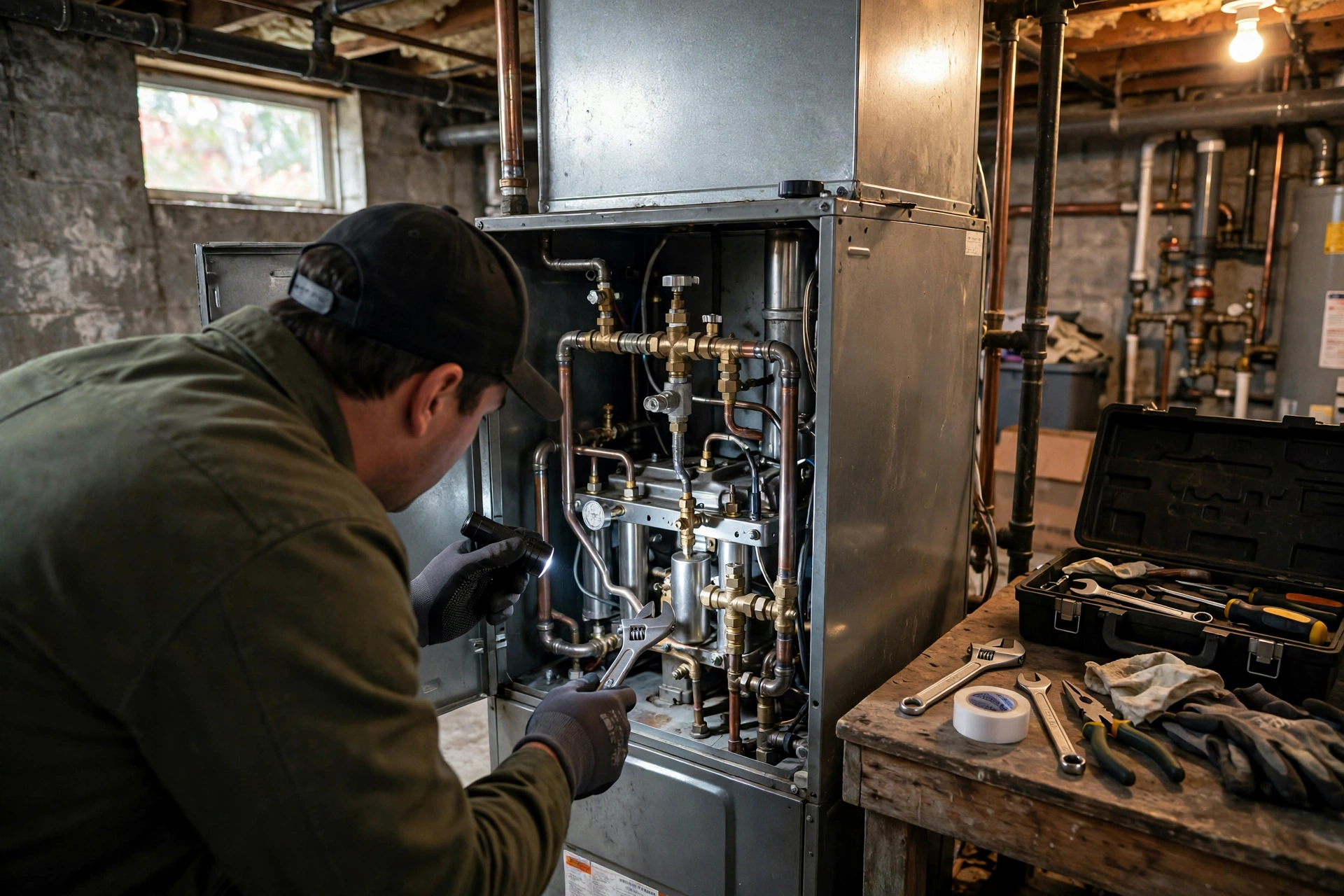
We work on gas furnaces every week through the heating season. Call us, tell us what you are seeing and hearing, and we will check ignition, gas flow, venting, and safety controls in order, not by swapping parts at random.
Gas furnace safety checks we never skip
Every gas visit includes a carbon monoxide check at the furnace and at nearby living spaces, a look at the vent path from the unit to the outside, and a test of the safety controls that shut the furnace down when something goes wrong. Those checks come first, before comfort tuning, because a warm house is not a safe house if combustion gases are leaking.
We also check the flame, the igniter, the gas valve, and the pressure switch as a chain. Each part has a job in the lighting sequence, and a failure in one link stops the chain in a specific way. Reading that sequence, rather than replacing parts one at a time, is what keeps a gas repair honest and usually keeps the bill of parts short.
Vent joints get a close look as well. Loose or corroded joints, a vent that slopes the wrong way, or a chimney liner that has cracked can all spill exhaust into the basement. High efficiency units with plastic vents have a different risk: condensate pooling in a sagging pipe can block exhaust and trip the pressure switch. Both vent styles get checked, not just the one we expect to find.
Safety checks never skip the chain: carbon monoxide readings at the furnace and in nearby rooms, vent joints and slope from the unit to the outside, and each safety control tested in its turn. That sequence is why a yearly safety inspection matters even when the furnace seems fine, and our intake and exhaust freeze-up guide explains the winter pattern in plain terms.
How a gas service visit runs
A gas visit follows a set order for a reason. Jumping straight to a part swap can mask a vent problem or a safety fault, and those are the problems that come back. The order below keeps the diagnosis clean.
Listen and observe
We ask what the furnace did, when it started, and what the thermostat and control lights showed, then we watch a full heating cycle.
Test the lighting chain
We check ignition, flame sensing, gas valve operation, and pressure switch action in order, and we measure carbon monoxide.
Inspect venting
We trace the vent from the furnace to the outside, check joints and slope, and clear snow or ice at the outlet.
Repair and retest
We replace only the failed part, run the furnace through several cycles, and confirm steady flame, airflow, and safe exhaust.
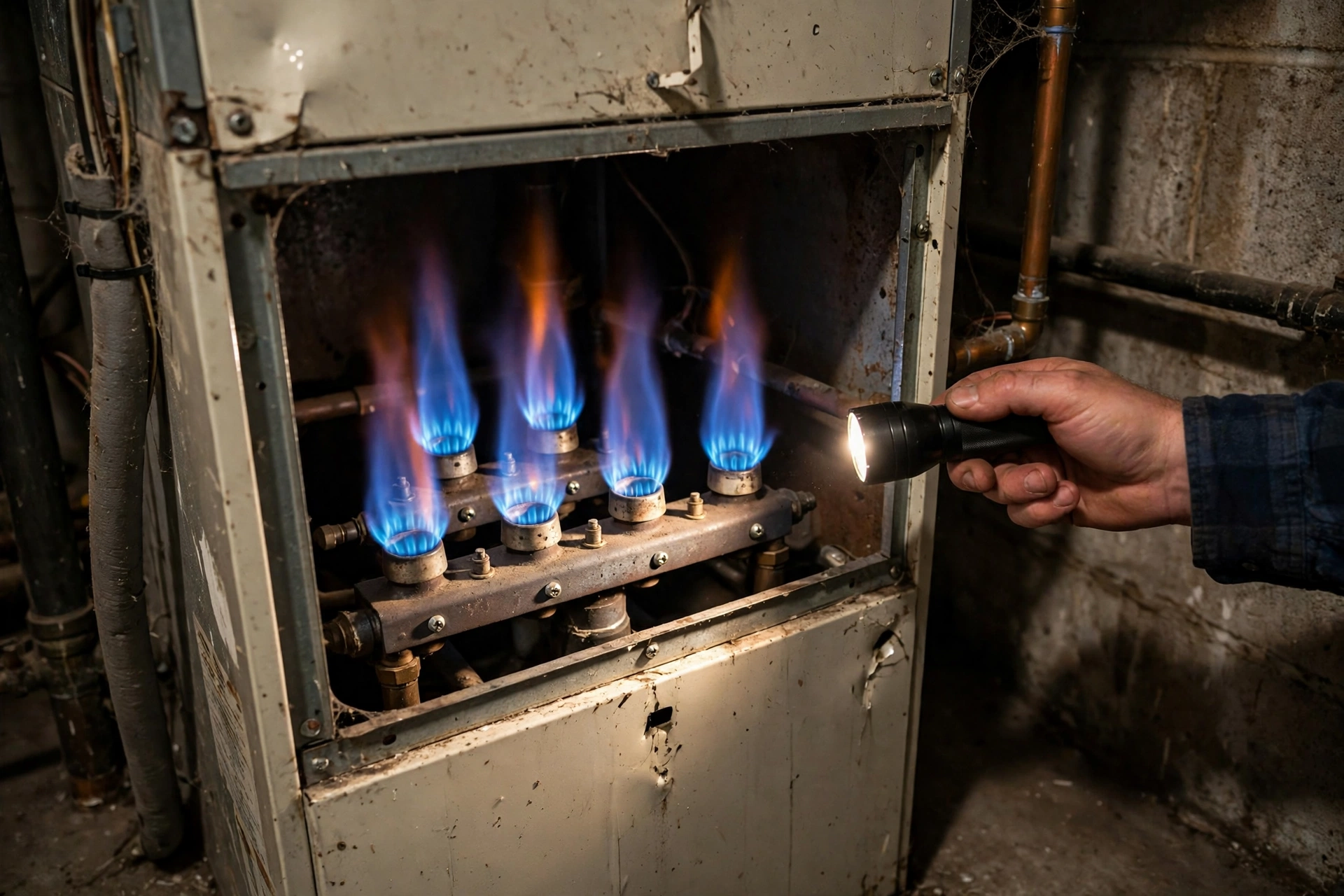
A healthy gas flame burns steady and blue, and reading it is a diagnostic skill, not a glance. We watch how the flame lifts, whether it rolls out when the blower starts, and whether each burner lights in step with the others. A lazy yellow flame points to incomplete combustion, and that is when a combustion analyzer and a carbon monoxide detector earn their place, alongside the checks on our heat exchanger page for cracks that let exhaust into the air stream.
What a gas visit feels like
A gas visit is quieter than most families expect. There is no rush to replace parts, and no loud testing. We watch a full heating cycle first, listening for the igniter, the burner lighting, and the blower starting in order. That order tells us where the chain breaks, if it breaks at all. A furnace that lights cleanly and runs steady through three cycles has told us more than a drawer full of new parts ever would.
Carbon monoxide testing happens at the furnace and in nearby rooms, not just at the unit. We test supply air as well, because a leak into the air stream shows up there before it shows up anywhere else. Those readings go into the visit record, so the next visit can compare them. A reading that stays steady year to year is reassuring. A reading that moves is a warning worth acting on.
After the repair, we run the furnace again and watch the same cycle we watched at the start. The flame should look steady, the blower should start smoothly, and the house should warm evenly. If anything still looks off, we say so and keep tracing. A gas furnace that leaves us should run cleanly, not just run, and that standard is what the second test confirms.
We also check the filter and return path on every gas visit, because a starved furnace behaves like a gas fault. A clogged filter can trip a limit, shorten a cycle, and mimic a burner problem, and clearing it sometimes ends the complaint without a part. That check takes minutes, and it keeps a gas diagnosis honest.
Smell gas, see soot, or hear your gas furnace lock out? Call Paper City Heating and describe what you are seeing.
Call (920) 523-4330 Contact Us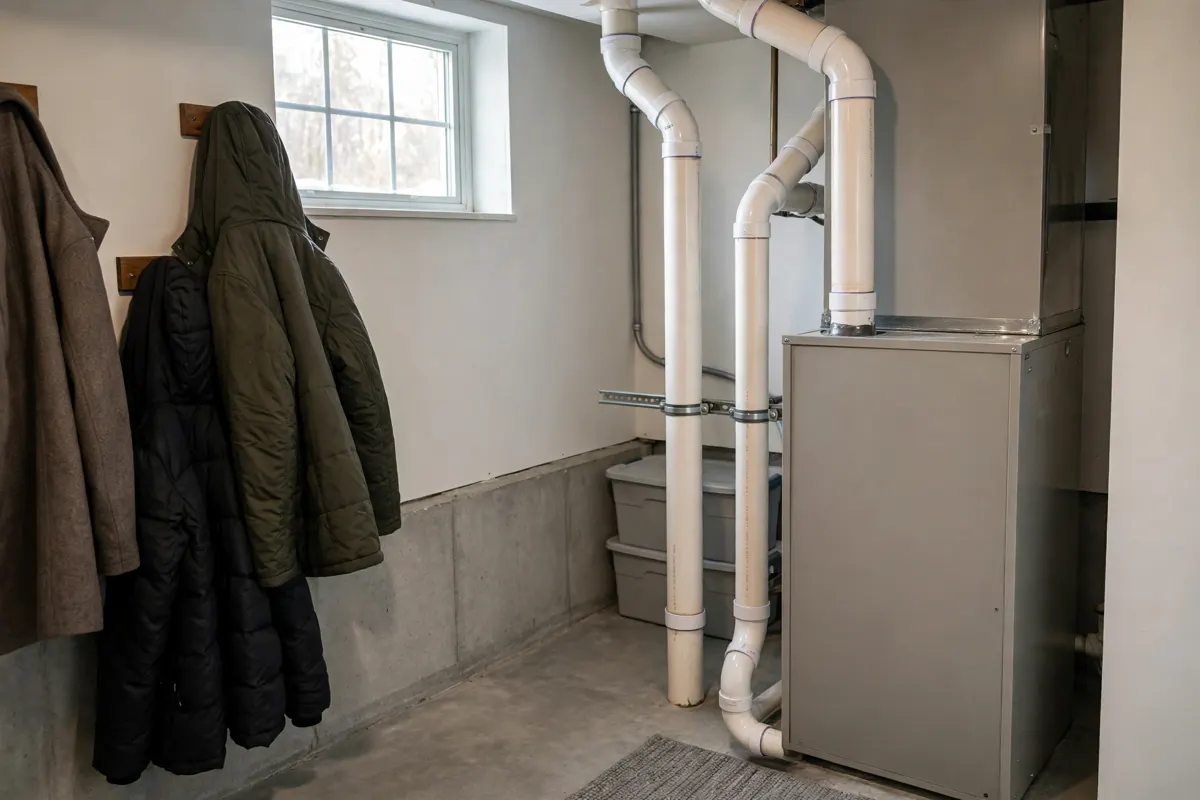
The first check is always safety
Gas work starts with the lighting chain, not with a part. Ignition, flame sensing, gas flow, and venting each have a step, and we test those steps in order. That order finds the failed link without replacing good parts along the way.
Safety testing runs alongside the repair, not after it. Carbon monoxide readings, vent condition, and safety control tests come first in our minds, even when the comfort complaint is what brought us out. A warm house that is not safe is not a finished job.
Carbon monoxide safety belongs in every gas furnace visit. The U.S. Consumer Product Safety Commission publishes plain guidance on alarms and symptoms that every gas heated home should know: carbon monoxide guidance from the Consumer Product Safety Commission.
Signs of a gas furnace problem
A healthy gas flame burns steady and blue, with only a small yellow tip at most. A flame that lifts off the burner, flickers yellow, or rolls out when the blower starts deserves attention right away. Soot around the burner door, a smell of gas, or a carbon monoxide alarm sounding are reasons to leave the area, ventilate if you can do it safely, and call for help.
Short runs and lockouts tell a story too. If the furnace lights, runs for a few minutes, then shuts down before the house warms, the flame sensor, the pressure switch, or the vent path may be at fault. If it tries to light three times and then locks out, the ignition system or gas supply needs tracing. Write down what you saw, how many tries it made, and whether any lights on the control board blinked. That detail shortens the diagnosis a lot.
Uneven heat can be a gas problem or an airflow problem, and the two feel similar from a living room chair. A burner running at reduced output, a blower running too slow, or a duct restriction can all leave back rooms cold. We test burner operation and airflow separately so we do not blame the gas valve for a duct problem, or the ducts for a burner problem.
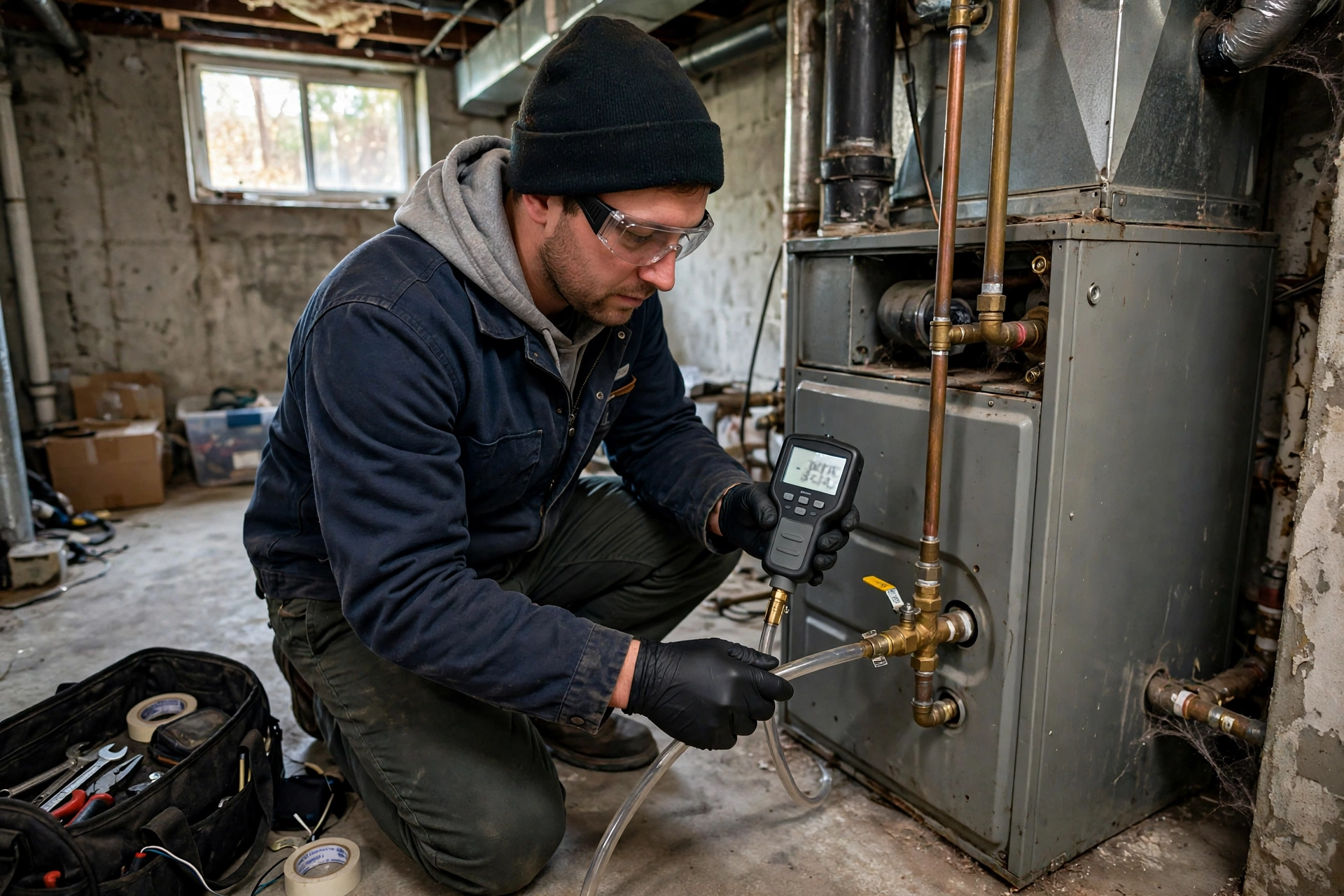
Gas pressure is measured, never assumed. A digital manometer on the valve test port shows inlet and manifold pressure against the rating plate, and a reading outside that range explains delayed ignition, weak flames, and lockouts that a new igniter would not fix. Black iron pipe, flexible connectors, and the gas valve itself must all match the installation instructions and NFPA 54, the National Fuel Gas Code, so the pressure we set is the pressure the burner was designed for.
Why gas furnaces struggle in cold snaps
Cold snaps expose weak points that mild weather hides. Intake pipes can draw in snow, exhaust vents can ice over at the outlet, and a furnace that ran fine at thirty degrees can start locking out when the wind drives the temperature down. The furnace is not always broken in these cases. It is often protecting itself because air or exhaust cannot move the way it should.
A gas furnace needs three things in balance: fuel, air, and a clear path for exhaust. Snow piled against an outside vent, a blocked intake screen, or a flue with a partial obstruction throws that balance off. The flame sensor may shut the unit down, the pressure switch may refuse to close, or the rollout switch may trip. Each of those shut downs is a safety response, and resetting the furnace over and over without finding the cause only repeats the cycle.
Older gas furnaces carry their own cold weather habits. Standing pilots can blow out in a drafty basement. Older igniters grow brittle and crack. Gas valves stick after a long summer idle. A visit in October, before the first hard cold, catches most of these patterns while the house is still warm enough to work in comfortably.
Cold snaps expose weak points that mild weather hides, and gas furnaces feel them first at the vent. In Greenville and Appleton, snow piled against a side-wall vent outlet or ice at the intake will lock a high-efficiency furnace out, and clearing the outlet is the first check before any part is blamed.
Gas vs electric vs propane at a glance
Heat types differ in fuel, venting, and controls. The comparison below keeps those differences plain, without favoring one fuel over another.
| Heat type | Suits | Needs |
|---|---|---|
| Natural gas | Homes with a gas line, steady winter heat | Gas supply, venting, carbon monoxide alarms |
| Electric | Homes without gas, smaller spaces | Electric service capacity, heating elements |
| Propane | Rural homes past the gas main | Tank, line, and delivery planning |
Questions homeowners ask about gas furnace services
Why does my gas furnace keep shutting off?
A gas furnace shuts off early when a safety control trips, often because of a dirty flame sensor, a blocked vent, a failed pressure switch, or low airflow. The control board usually records the fault, and tracing the lighting and vent chain in order finds the cause faster than resetting the unit repeatedly.
Is a yellow flame on a gas furnace dangerous?
A yellow, lazy, or lifting flame can mean incomplete combustion, which may produce carbon monoxide. Do not ignore it. Turn the furnace off if you can do so safely, ventilate the area, and have the burner, gas pressure, and venting checked before running the unit again.
How often should a gas furnace be serviced?
Once a year before heating season is the usual rhythm. A yearly visit covers burner cleaning, ignition, safety controls, venting, and carbon monoxide testing. Homes with older furnaces or heavy winter use benefit most from keeping that visit on the calendar.
Repair or replace a gas furnace
A single failed igniter, flame sensor, or pressure switch on an otherwise sound furnace is a repair, plain and simple. The heat exchanger is the line. If it is cracked, the furnace should not keep running, because combustion gases can escape into the air stream. That is a replacement conversation, not a patch, and we show you what we found so you can see why.
Age and repair history sit beside that line. A furnace that needed a major part last winter and another this winter may be telling you the wear is general, not isolated. A furnace that runs steady, passes safety checks, and only needed one small part in years of service still has life in it. We lay out both paths with what each one involves, and you choose.
A gas visit feels quieter than most families expect, because most of it is watching full heating cycles and taking readings. Keep the vent area clear after heavy snow, test carbon monoxide alarms on schedule, and note any new boom at startup or soot near the burner door. Those habits follow the alarm maker's placement guide and the furnace maker's instructions, and they protect the burner and venting that propane furnace service checks on homes past the gas main.
Common questions about gas furnace services
What should I do if I smell gas near my furnace?
Leave the house, do not flip switches or light anything, and call your gas utility or emergency services from outside. Do not restart the furnace until the leak has been found and fixed. A gas smell is never a wait and see problem.
Why does my furnace try to light but fail?
Failed ignition usually traces to the igniter, the flame sensor, the gas valve, or the gas supply. A cracked igniter cannot light the burner. A dirty flame sensor lights it, then drops it. A stuck valve never opens. Testing each link in order finds the failed one.
What is a flame sensor?
A flame sensor is a small rod that sits in the burner flame and tells the control board the flame is present. When it gets coated with deposits, it stops sensing reliably and the furnace shuts the burner down. Cleaning or replacing it is a common, straightforward fix.
Can snow block my furnace vent?
Yes. High efficiency furnaces vent through pipes that exit a side wall, and snow drifts can cover the outlet. The furnace then locks out because exhaust cannot leave. Keep the vent area clear after heavy snow, and check it during a cold snap if the heat stops.
Do I need carbon monoxide alarms with a gas furnace?
Yes, and they belong on each level of the home and near sleeping areas, following the alarm maker's placement guide. Alarms are a backup, not a substitute for yearly service and vent checks, and they should be tested regularly.
Why is my gas furnace so loud when it starts?
A loud boom at startup can mean delayed ignition, where gas builds up before lighting. A rumble can mean burner or vent trouble. Either sound deserves a visit, because delayed ignition stresses the heat exchanger and the cabinet over time.
Related services
Talk to Paper City Heating
Call us at (920) 523-4330 or email [email protected] and describe what your gas furnace is doing: the sound, the flame, the lockouts. We will trace ignition, gas flow, and venting in order and explain each finding plainly.
Call (920) 523-4330 Contact UsLast updated: October 31, 2026