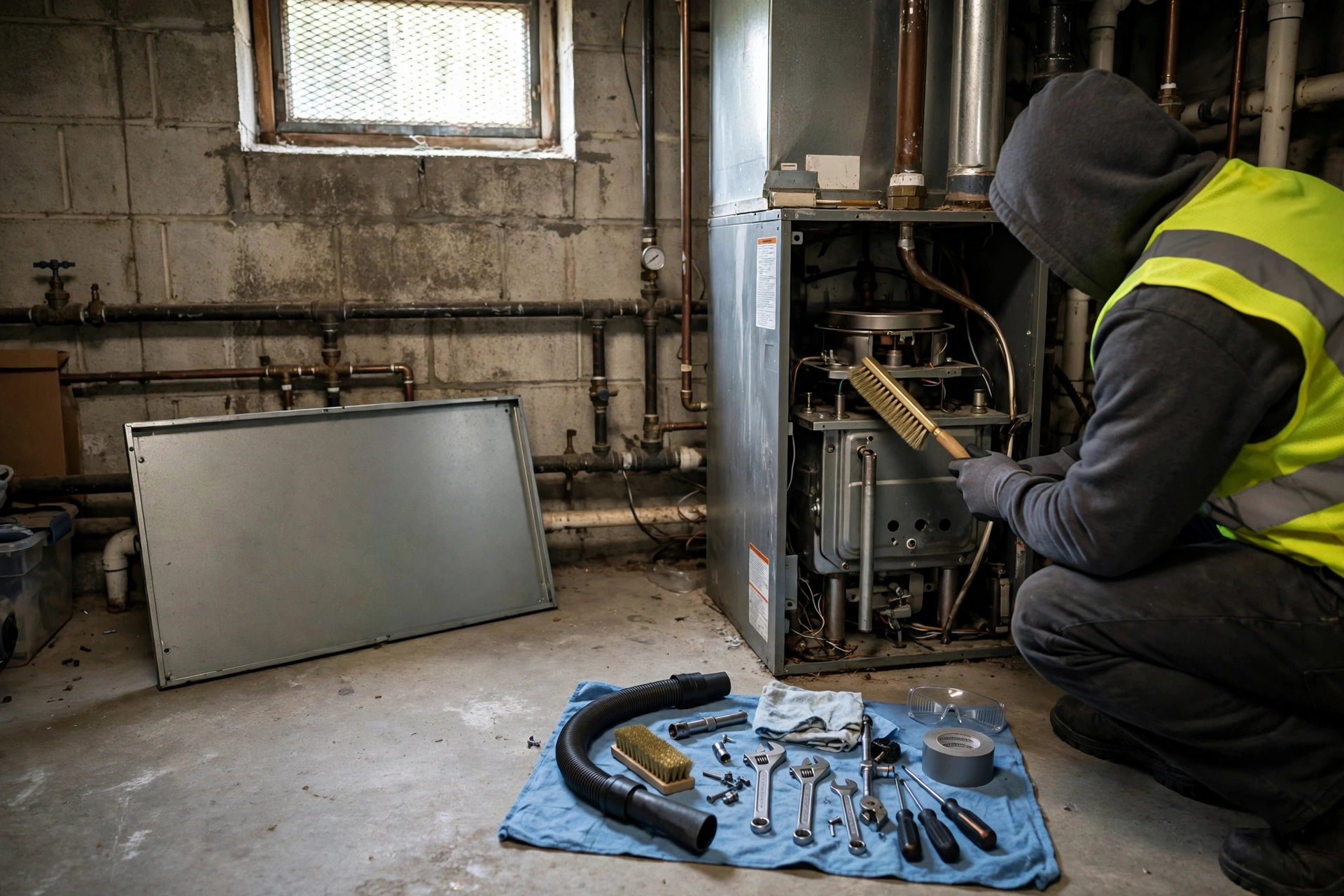
We combine tune-up and safety inspection in one visit, so you do not need two appointments for one furnace. Call before heating season, and we will clean, test, and check the unit while the house is still warm enough to work in comfortably.
Tune-up timing through the year
Early fall is the best time for a tune-up, before the first hard cold and before service calendars fill. September and October visits happen in a warm house, with time to order a part if the inspection finds one wearing out. A tune-up in January, after a failure, is a repair visit, not a planned check, and it happens in a cold house under pressure.
Midwinter checks still help when fall was missed. A visit in January or February can still clean, test, and record, and it can catch a problem before the coldest week. The difference is timing: a fall visit prevents, a midwinter visit rescues. Both are better than a skipped year, and both give you readings to compare next fall.
Between visits, simple habits keep the furnace steady. Check the filter monthly in heating season, keep returns open, keep the furnace area clear of storage, and note any new sound, smell, or pattern. A tune-up looks over the steel heat exchanger, the fiberglass filter, and the copper wiring connections, and it follows the manufacturer's service interval and the local code requirements for carbon monoxide alarms. A note about when a noise started, or which rooms changed, helps the next visit enormously, because a pattern described well is a diagnosis half done.
Timing through the year matters because parts wear on a schedule of their own. A furnace that ran all winter deserves its inspection before the next one, and a safety inspection after any vent or gas work confirms nothing was disturbed. Our heat exchanger inspections use the same camera and carbon monoxide checks, and the tune-up checklist lists every item in the order we test it.
What a yearly visit feels like
A yearly visit is unhurried work, and unhurried is the point. We clean, test, and record without the pressure of a cold house waiting, because the visit happens before heating season, not during a breakdown. That calm lets us notice small wear, a weakening igniter, a sensor starting to coat, a belt starting to crack, that a rushed emergency visit would miss.
Readings make the visit useful beyond the day itself. Temperature rise, carbon monoxide, gas pressure or element draw, and airflow notes all go into a record we can compare next year. A furnace with a year to year record is a furnace whose slow changes are visible. A furnace without one is a furnace whose problems arrive as surprises, and surprises in January are the worst kind.
At the end, we report in plain words: what we cleaned, what we tested, what reads well, and what is wearing out. That report is the real product of a tune-up, more than the cleaning itself, because it lets you plan. A part that will need replacing next year is a plan, not a crisis, when you learn about it in October. That planning is why a yearly visit pays for itself in calm, if not in any single repair avoided.
We also check the area around the furnace on every yearly visit, because storage piled against a cabinet blocks service access and combustion air. A clear area around the unit is a safety habit as much as a convenience, and we mention it when we see storage creeping close. Keeping that area clear also makes the next yearly visit faster, because access is already open and nothing needs moving before work can start. A clear furnace area is a small habit with a real safety payoff.
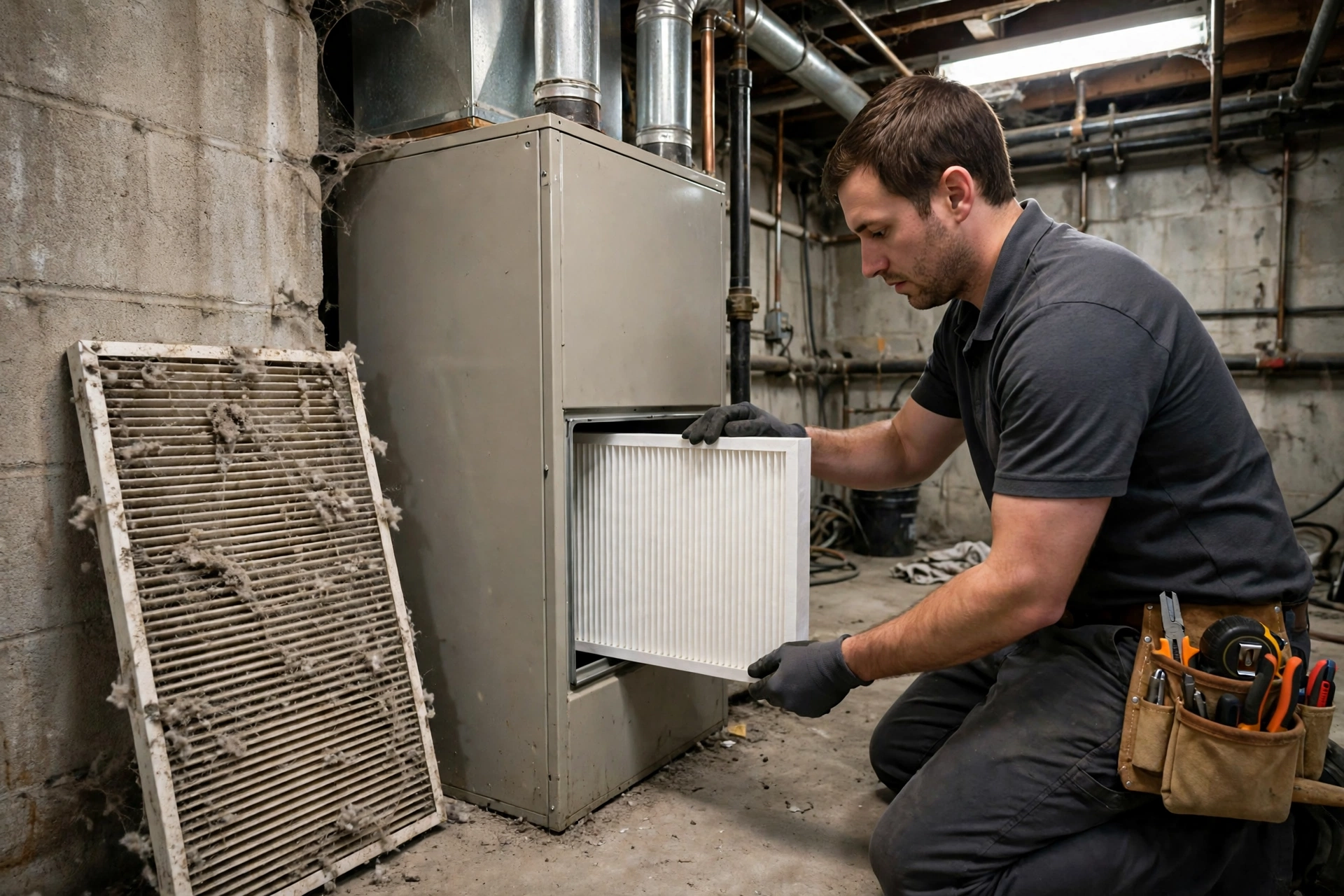
The filter is the cheapest part of a tune-up and the one that causes the most trouble when it is ignored. A pleated filter loaded with dust raises static pressure, starves the blower, and can trip the limit switch on a cold night. We size the replacement to the filter slot and the maker's airflow rating, and we note the size on the visit record so the next change is not a guess, which is the same record-keeping that guides our blower motor checks from year to year.
Between visits: what you can check
You can check the filter, the thermostat setting, and the vent outlet after snow without tools or risk. A filter that looks grey needs changing. A thermostat set to heat, with a target above room temperature, should call for heat. A vent outlet buried in snow needs clearing before the furnace runs well.
Leave burner, gas, and electrical work to a visit. Opening a burner compartment, adjusting gas pressure, or testing live electrical parts without training risks injury and damage. The line is simple: filters, settings, and snow clearing are homeowner jobs. Everything inside the cabinet is a technician job, and we are glad to do it.
Between visits, what a homeowner can check is limited and should stay limited: filter condition, thermostat batteries where fitted, vent outlets clear of snow, and any new smell, noise, or soot. Anything inside the cabinet belongs to the visit, following the maker's safety instructions, and it protects the gas valve and controls that gas furnace service tests when a fault appears.
Heating season coming? Call Paper City Heating and book a tune-up and safety inspection before the cold arrives.
Call (920) 523-4330 Contact UsSigns your furnace is overdue
A furnace that needed a restart last winter, ran louder than usual, or left rooms uneven is telling you a check is overdue. Soot around the burner, a filter that looks grey and matted, or a blower that sounds rough on startup are visible signs that cleaning and testing have slipped. None of these alone means a breakdown is coming, but together they mean the furnace has been running without the care it needs.
Age and use raise the stakes. An older furnace, a furnace that runs long hours through deep cold, or a furnace in a dusty home with pets and workshop activity all benefit more from yearly care. A newer furnace in a clean home still benefits, because a yearly visit records its baseline and catches a small fault, like a weakening igniter, before it becomes a no heat night.
Skipped maintenance also hides safety drift. Vent joints loosen, condensate paths clog, and safety controls age, all without a visible breakdown. A safety inspection catches that drift: limit controls, pressure switches, rollout switches, and carbon monoxide readings all get tested, not assumed. That testing is the part of a tune-up that matters most on a cold night.
The Department of Energy lists yearly heating maintenance tasks that keep furnaces safe and steady, from filters to vent checks: heating maintenance guidance from the Department of Energy.
Safety inspection, step by step
The safety inspection is the heart of the visit. Cleaning and tuning make a furnace run well. Safety testing makes it safe to run at all.
Clean and inspect
We clean burners, flame sensor, and blower wheel, change or clean the filter, and inspect cabinet, ducts, and vent.
Test ignition and controls
We test ignition, flame sensing, gas pressure or element staging, and blower speeds through full cycles.
Safety check
We test limit, pressure, and rollout controls, inspect the heat exchanger, and measure carbon monoxide.
Record and report
We record readings, note parts wearing out, and report findings in plain words with next steps.
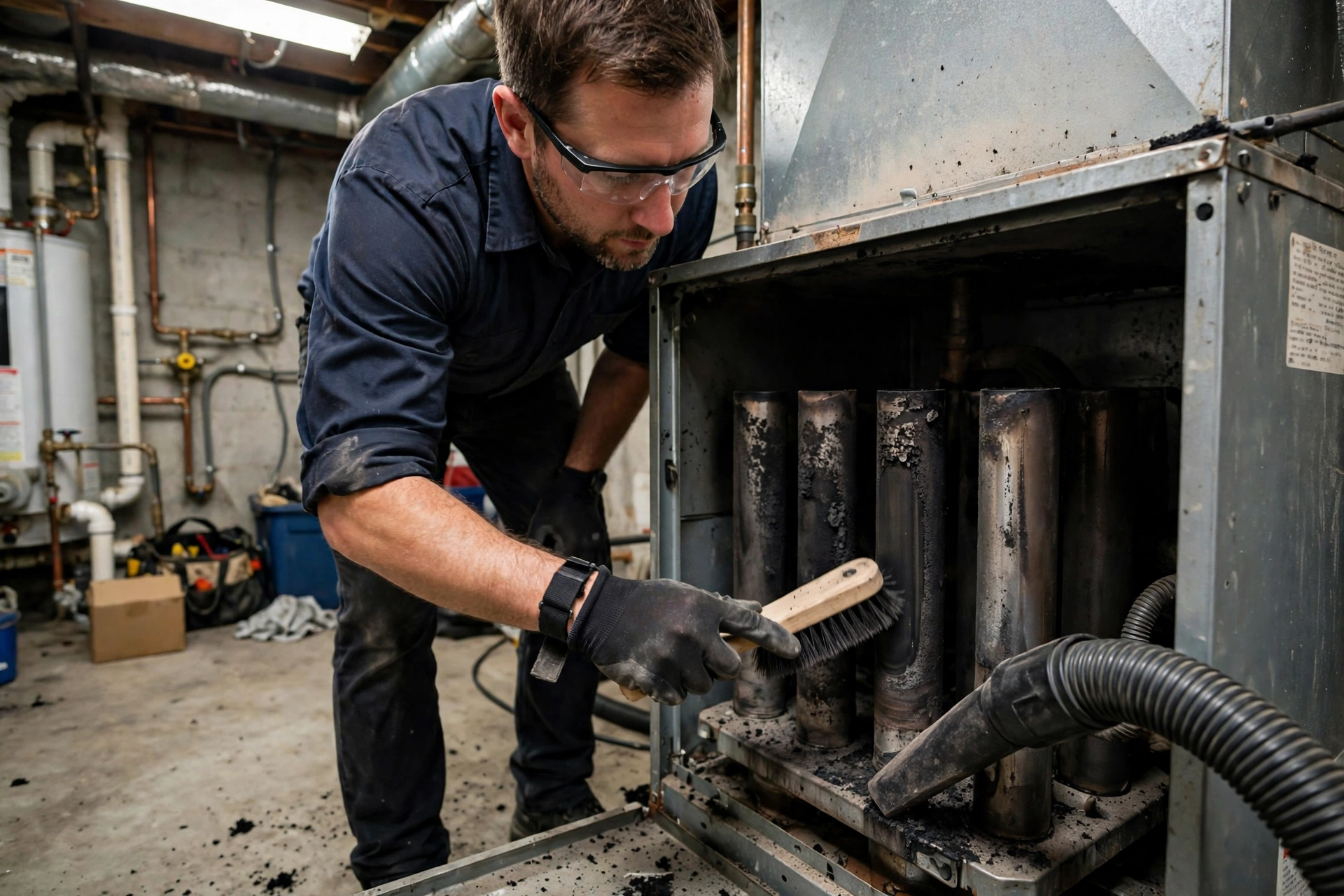
Burner cleaning is careful work, not a quick wipe. We brush soot from the burner tubes, vacuum the compartment, and check the flame pattern and the igniter afterward, because a burner that lights unevenly stresses the heat exchanger. A combustion analyzer reading, a carbon monoxide check at the flue and in nearby rooms, and a look at the vent joints complete the safety side of the visit, following the maker's installation and inspection instructions.
What a tune-up actually covers
A tune-up covers cleaning and adjustment, not just a look. We clean the burner assembly, the flame sensor, and the blower wheel where access allows, change or clean the filter, and check the cabinet and duct connection for leaks and loose panels. Cleaning matters because dust on a flame sensor, soot on a burner, and lint on a wheel each change how the furnace runs, and each one builds up quietly over a season.
Adjustment follows cleaning. We check gas pressure or element staging, test ignition timing, confirm blower speeds, and verify thermostat calibration. A burner running at the wrong pressure, a blower at the wrong speed, or a thermostat reading several degrees off each waste heat or wear parts, and none of them announces itself with a breakdown. The tune-up catches them while they are still adjustments.
We also record readings: temperature rise, carbon monoxide levels, gas pressure or element draw, and airflow notes. Those readings form a record year to year, so a change in flame, pressure, or temperature rise stands out at the next visit. A furnace with a record is easier to diagnose than a furnace with only a memory of last winter.
A tune-up actually covers the whole heating chain: ignition, flame sensing, gas flow, venting, airflow, and safety controls, each tested in order. In Little Chute and Appleton, the October visit is the one that catches a cracked igniter or a blocked intake before the first hard cold turns it into a no-heat call.
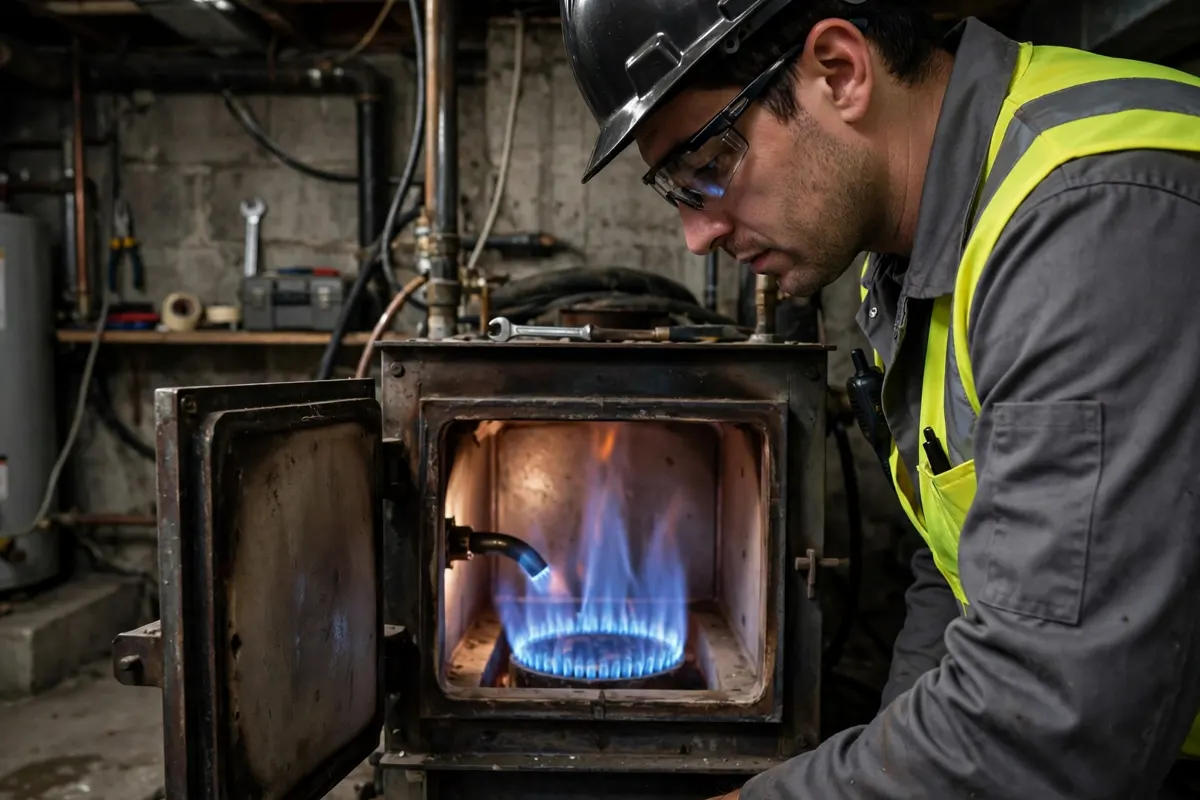
A yearly visit starts with a full look
Yearly work starts with cleaning, not with a sales list. Burners, flame sensor, and blower wheel get cleaned, the filter gets changed or cleaned, and the cabinet and vent get inspected before any adjustment.
Testing follows cleaning, with ignition, controls, and safety devices run through full cycles. Readings go into a record for next year, so slow changes become visible instead of arriving as surprises.
Questions homeowners ask about furnace maintenance, tune-up & safety inspection
What does a furnace tune-up include?
A tune-up includes cleaning burners, flame sensor, and blower wheel, changing or cleaning the filter, checking gas pressure or element staging, testing ignition and blower speeds, and verifying thermostat calibration. Readings are recorded so year to year changes stand out.
How often should a furnace be serviced?
Once a year before heating season is the usual rhythm. Older furnaces, dusty homes, and furnaces that run long hours in deep cold benefit most from keeping that visit on the calendar, because wear and safety drift build quietly and a small fault found in fall costs less trouble than one found in January.
What is checked in a furnace safety inspection?
A safety inspection tests limit, pressure, and rollout controls, inspects the heat exchanger and venting, checks burner and flame condition, and measures carbon monoxide at the furnace and nearby rooms. Those tests together confirm combustion gases stay out of house air.
Tune-up vs safety inspection
Tune-up and safety inspection cover different ground. The comparison below shows what each part covers and why each one matters.
| Visit part | Covers | Why it matters |
|---|---|---|
| Tune-up | Cleaning, adjustment, airflow, calibration | Steady heat, fewer breakdowns |
| Safety inspection | Controls, exchanger, vent, carbon monoxide | Safe combustion and exhaust |
| Combined visit | Both, in one appointment | One record, one visit, full picture |
Common questions about furnace maintenance, tune-up & safety inspection
When is the best time for a tune-up?
Early fall, in September or October, before the first hard cold. The house is warm, the calendar has room, and any worn part found during inspection can be ordered before deep cold arrives.
How long does a tune-up take?
Most tune-up and safety visits take about an hour to ninety minutes, depending on access, unit condition, and how much cleaning the burner and blower need. A unit with heavy soot or a hard to reach cabinet takes longer, and we say so during the visit.
Should I change the filter before a tune-up?
Change it if it looks grey and clogged, and tell us when you last changed it. Filter history tells us about dust load and airflow, and a fresh filter lets us test airflow the way the furnace will actually run.
What if the inspection finds a problem?
We show you the finding, explain what it means in plain words, and lay out repair or replacement options with what each involves. Urgent safety findings, like a cracked exchanger, mean the furnace stops running until the issue is resolved.
Does a tune-up prevent breakdowns?
A tune-up lowers breakdown risk by catching wear, cleaning parts, and testing controls before deep cold. It cannot prevent every failure, because parts can fail without warning, but it catches the failures that give warning signs.
Can I do a tune-up myself?
Homeowners can change filters, check thermostat settings, and clear snow from vents. Burner cleaning, gas pressure, electrical testing, and safety control checks belong to a trained visit, because they involve combustion and live electrical parts.
Related services
Talk to Paper City Heating
Call us at (920) 523-4330 or email [email protected] to arrange a maintenance and safety visit. We will run the full check, leave a written record, and explain anything that needs attention.
Call (920) 523-4330 Contact UsLast updated: October 31, 2026