By Paper City Heating
Last updated: October 31, 2026
You wake to a cold house at 2 a.m., the furnace silent, and the temperature falling. The first minutes matter, but panic does not help, and neither does tearing the furnace apart in the dark. This post gives you a calm order: safety first, simple checks second, pipe protection third, and a warm room plan while you wait for help. Keep this plan where you can find it at night, because a plan you have to search for online at 2 a.m. is not much of a plan. See gas furnace repair.
A January freeze adds urgency that a fall outage does not. With an average low near 13 degrees Fahrenheit, a house without heat cools steadily, and pipes on outside walls can freeze within hours, depending on insulation, wind, and starting temperature. That does not mean every outage becomes a pipe disaster, but it does mean pipe protection starts early, alongside the furnace checks, not after the house is already cold.
Safety first, before any furnace check
Before you touch the thermostat or the furnace, check for the two dangers that change everything: a gas smell, and a carbon monoxide alarm. If you smell gas, leave the house right away with family and pets, and call for help from outside. Do not switch lights, do not use a phone inside, and do not re-enter to look for the source. If a carbon monoxide alarm sounds, leave the same way, and call for help from outside, even if you feel fine. An alarm that stops on its own does not mean the house is safe. See why furnaces fail on the coldest nights.
If neither danger is present, you can move to simple checks with a flashlight. Keep the house lights low, move slowly on cold floors, and keep children and pets in one warm room while you check. Never use a gas oven, a grill, or a generator indoors for warmth, and never bypass a furnace safety control to force heat. A cold house is a problem, but a gas or carbon monoxide danger is an emergency, and the order is always safety first, then heat.
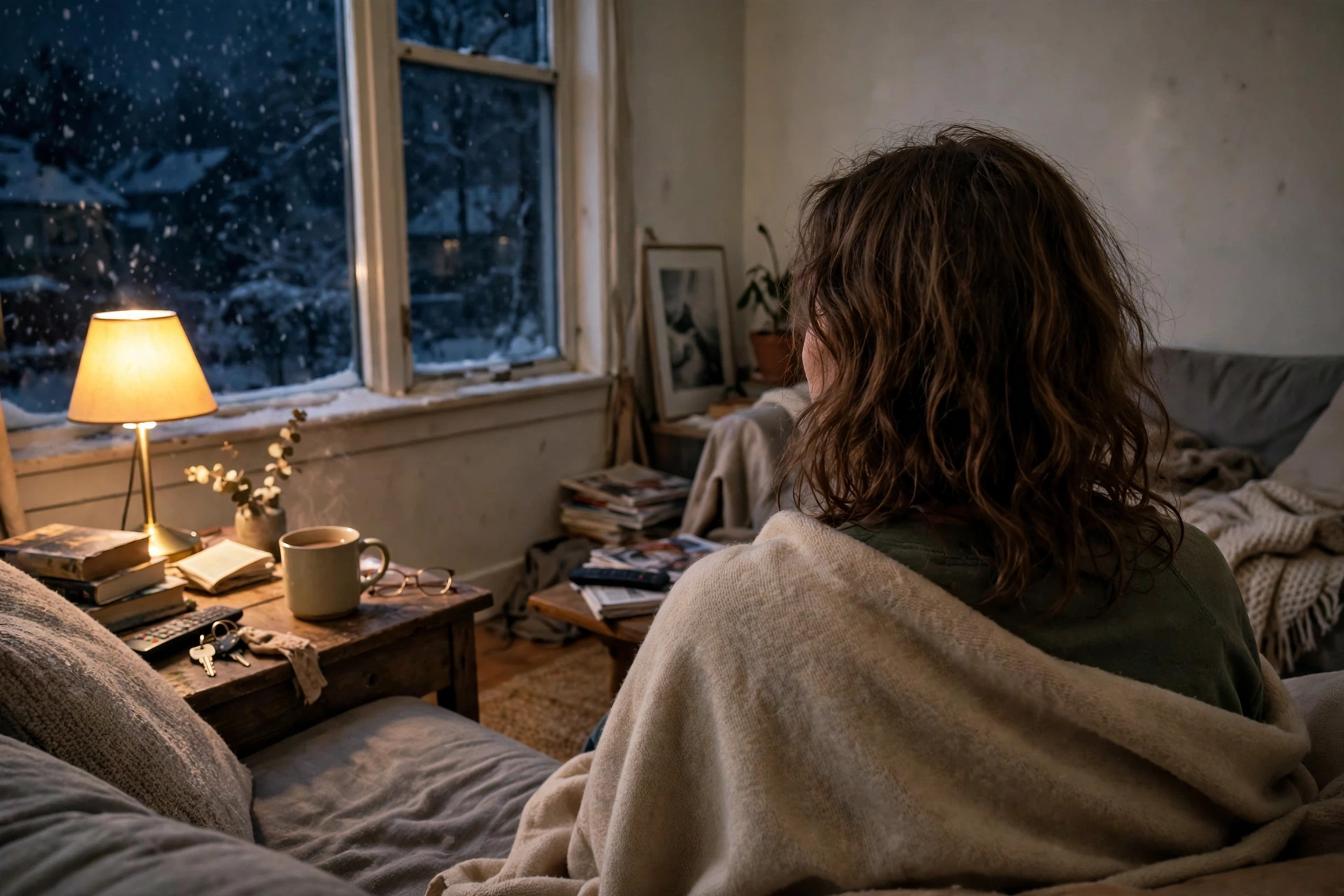
One warm room, closed off and layered with blankets, carries a household through the night far better than heating the whole house with portable heaters. Shut the doors, not the vents.
Night steps in order
Work through these steps in order, and stop at the safety step if anything changes.
Check for gas smell or alarm
Leave at once if either is present, and call from outside.
Check thermostat and power
Confirm heat setting, furnace switch, breaker, and filter.
Try one reset only
Reset once if your unit has a control, then stop if it fails.
Protect pipes early
Drip faucets on outside walls and open sink cabinets.
Set up one warm room
Close off one room, gather blankets, and check temperature often.
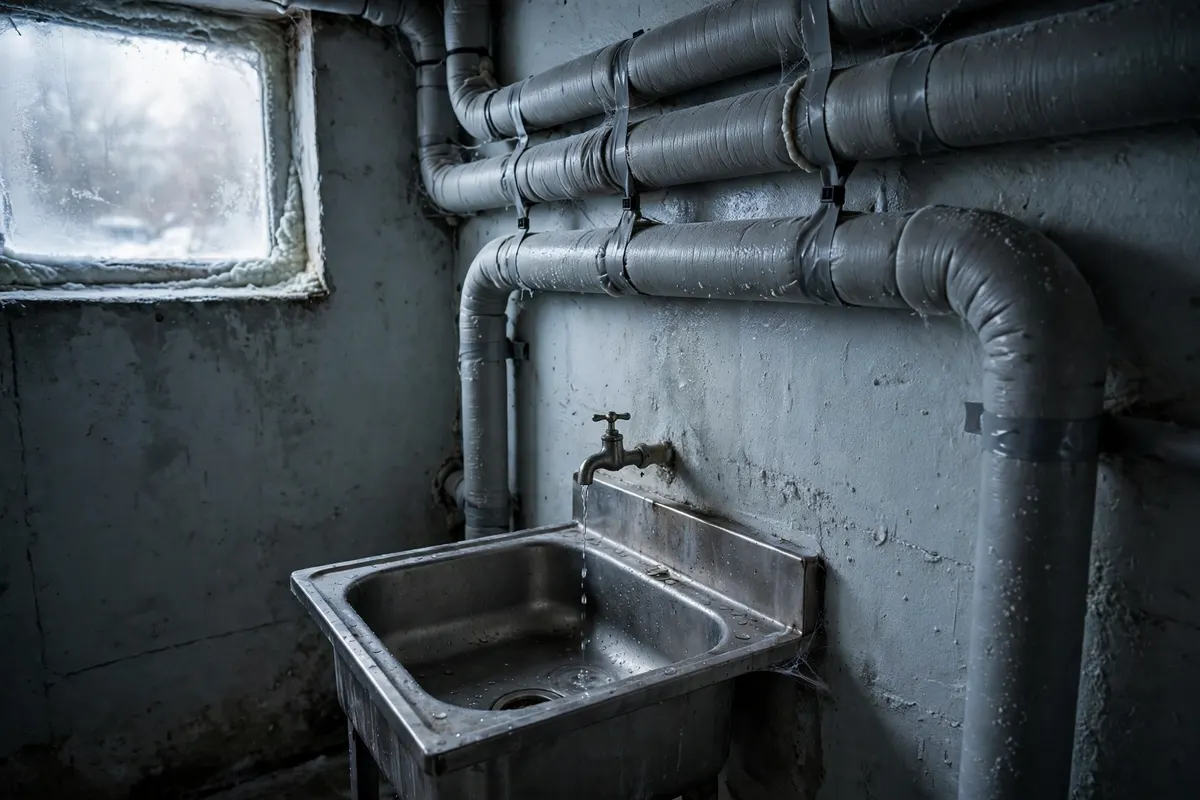
Insulated pipes along a cold basement wall resist freezing longer than bare pipes, but insulation only slows heat loss. During a long outage, dripping faucets and open sink cabinets still matter.
Heat out right now at night?
Check safety first, then thermostat, power, and filter, and call us with the indoor temperature and furnace pattern.
Call (920) 523-4330 Contact usProtecting pipes while the house cools
Pipe protection starts as soon as you know heat will be out for a while, not when pipes already feel cold. Let faucets on outside walls drip slowly, both hot and cold where you have them, since moving water resists freezing longer than still water. Open cabinet doors under kitchen and bathroom sinks, so warm room air can reach pipes in outside walls. Keep interior doors open, so any remaining warm air can circulate to cold corners, and close off unused rooms to concentrate warmth where pipes and people are.
Give special attention to pipes in unheated spaces: basements, crawl spaces, garages, and rooms above garages. Insulated pipes, shown in the photo below, resist freezing longer, but insulation only slows heat loss, it does not create heat, so a long outage can still freeze them. If a pipe already feels frozen, do not use a flame to thaw it, and do not force a faucet open. Note the location, keep the faucet open slightly so thawing water has somewhere to go, and call for help. A burst pipe causes far more damage than a cold night, so early drip and cabinet steps are worth the water used.
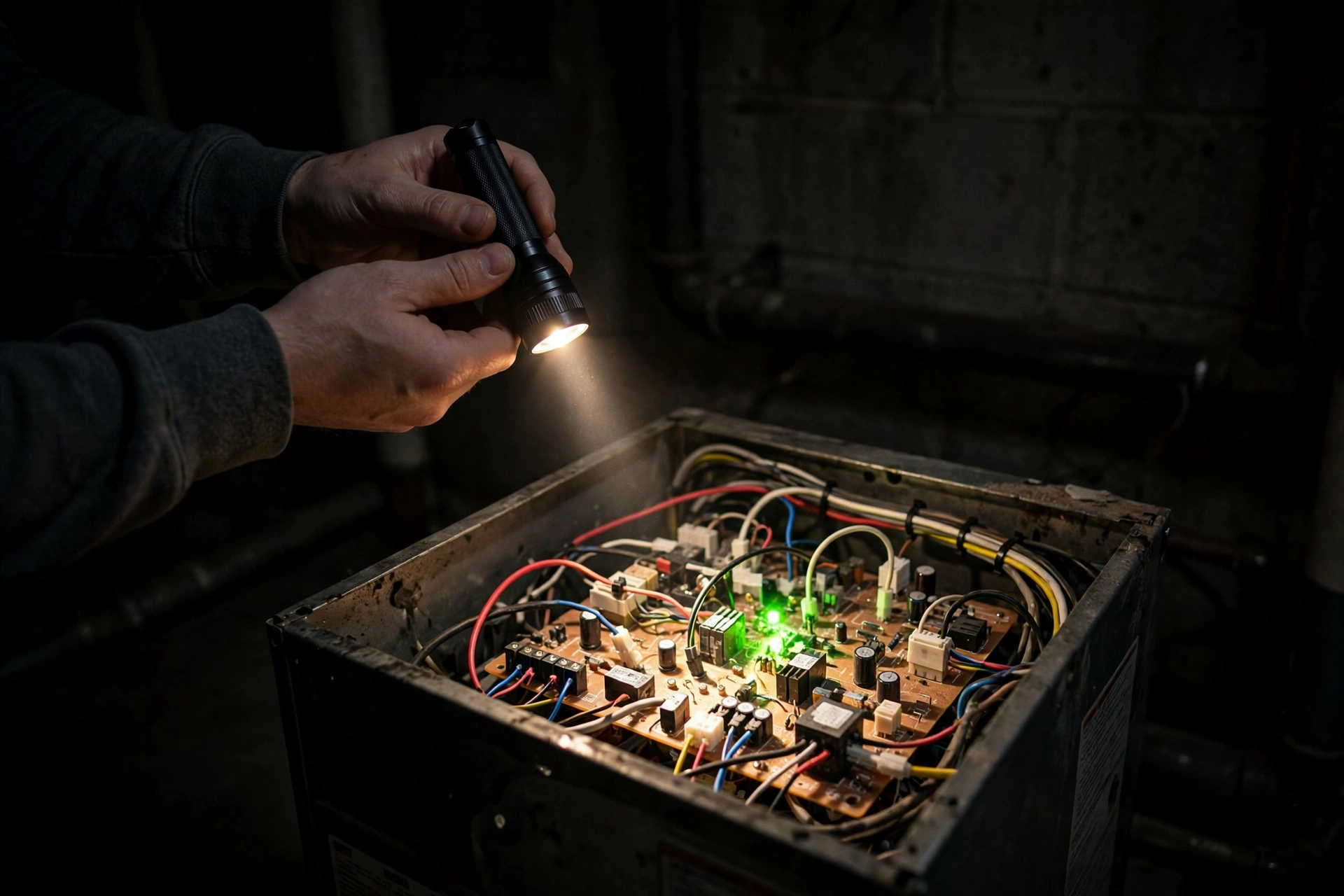
At night, a flashlight and the control board light are the only safe checks inside the cabinet. Note the blink pattern before you call; it is the furnace's own account of what stopped it.
Setting up one warm room through the night
Choose one room to keep warm, ideally a small interior room with few outside walls, and close it off with blankets over doorways if needed. Gather blankets, warm clothes, flashlights, phones, and water in that room, and keep children and pets there while the rest of the house cools. Use only safe heat in that room: an electric space heater, run while awake, clear of bedding, and plugged directly into a wall outlet, can help, but never run it while sleeping, and never use fuel burning heaters indoors.
Check the house temperature often, and note the rate of cooling. A house that drops slowly gives you time, while a house that drops fast, especially with wind, needs faster help and stronger pipe protection. Keep phones charged, keep our number and your supplier number handy, and call early, even at night, to describe the furnace pattern, the indoor temperature, and any alarm or smell. A night call that says the temperature and the furnace behavior helps us judge urgency honestly, far better than a call that only says the heat is out.
Morning after: what to check and what to fix
When help arrives or heat returns, do not assume the night is over. Walk the house room by room, check faucets for normal flow, and look under sinks and in the basement for leaks, damp spots, or burst pipe signs. A pipe that froze and thawed without bursting can still leak later, so watch those spots through the next day. Note any rooms that stayed cold, any new furnace sounds, and any error pattern you saw, and share that list on the service visit, since night faults often point to a part that needs replacing before the next cold snap. See Neenah furnace help.
Use the morning to fix the night plan itself. Replace the filter if you used the spare, restock blankets and flashlights in the warm room, and write down what worked and what did not. A furnace that failed at 2 a.m. once can fail again, and the next cold night will test the same weak part. A fall visit that checks ignition, flame sensing, venting, and safety controls is the long term fix, and the night plan is the bridge that gets you there safely.
Night outage questions, answered fast
Should I call for furnace help at 2 a.m. or wait until morning?
Call early, even at night, and describe the indoor temperature, the furnace pattern, and any smell or alarm. A house cooling fast in a January freeze, or a home with pipes at risk, needs faster help than a house holding temperature. Early calls also help technicians plan the morning route honestly, rather than guessing urgency.
How long before pipes freeze when the heat is out?
It depends on insulation, wind, starting temperature, and pipe location, so no single hour count fits every house. Pipes on outside walls and in unheated spaces freeze first, sometimes within hours in a hard freeze. Start drip and cabinet steps early, keep interior doors open, and check faucets often while you wait.
Can I use my gas oven for heat during an outage?
No, never use a gas oven, a grill, or a generator indoors for heat. Unvented fuel burning indoors raises carbon monoxide and moisture, and it can be deadly while people sleep. Use safe electric heat in one room while awake, protect pipes, and call for furnace help early.
Night tools and parts worth knowing by name
A night outage goes better with three things within reach: a flashlight, the furnace manual, and a carbon monoxide alarm with fresh batteries. The manual explains the control board blink codes, and the alarm is the one device that must never be silenced to get through the night. A technician later checks the same board with a multimeter, tests the flame sensor with fine steel wool where the design allows, and reads the pressure switch with a manometer. Those tools, plus a spare filter, cover most of what a maintenance and safety visit finds after a night failure.
Pipe protection is the second half of the night plan. Copper supply lines and PVC condensate lines near outside walls freeze first, so open the cabinet doors under sinks on outside walls and let a tap drip if the house is cooling fast. That advice sits alongside carbon monoxide safety for sealed homes, because a house closed tight against the cold changes how a furnace breathes. Follow the maker's instructions for your unit, and never bypass a safety control to force heat.
Keep the maker's manual with the filter size. The next visit, and the next homeowner, will both need it.
Middle-of-the-night outage questions
What is the first thing to do when the furnace quits at night?
Check for a gas smell and a carbon monoxide alarm first. If either is present, leave the house and call for help from outside. If neither is present, check the thermostat setting, furnace switch, breaker, and filter, and note the furnace control light pattern before calling.
How many times should I reset my furnace?
Reset once only, if your unit has a reset control. If the furnace fails again, leave it alone and call a technician. Repeated resets hide the real fault, can damage parts, and, with gas equipment, can create a hazard. One test reset is enough to learn whether the fault clears.
Should I drip faucets during a heat outage?
Yes, let faucets on outside walls drip slowly, and open cabinet doors under sinks so warm room air reaches pipes. Moving water resists freezing longer than still water. Keep interior doors open for circulation, and give special attention to pipes in basements, crawl spaces, and garages.
What rooms should I protect first in a freeze?
Protect rooms with pipes on outside walls first, plus bathrooms and kitchens with sink cabinets on outside walls. Close off unused rooms to concentrate warmth, and keep the warm room for people separate from the pipe protection steps. Check faucets often for slowing flow, which can signal freezing.
Is a space heater safe overnight during an outage?
No, do not run a space heater while sleeping. Use electric heaters only while awake and in the room, clear of bedding, and plugged directly into a wall outlet. At night, rely on blankets, warm clothes, and a closed off warm room, and call for help early rather than heating through the night unsafely.
What should I tell the technician when I call at night?
Tell them the indoor temperature, how fast it is falling, the furnace pattern and control light, what you already checked, and whether any smell or alarm is present. That detail helps judge urgency and plan the visit. A call with temperature and pattern beats a call that only says the heat is out.
Heat out tonight in Appleton?
Call us with the indoor temperature and what the furnace does when it tries to start, and we will help you sort the next step.
Call (920) 523-4330 Contact usRelated pages
Safety first, pipes second, warm room third, call early.
Keep this plan where you can find it at night, and fix the weak part before the next cold snap.
Call (920) 523-4330