By Paper City Heating
Last updated: October 31, 2026
October is the kindest month to find furnace trouble. The air is cool enough to test the system properly, but not so cold that a repair leaves the house freezing. First frost in the Fox Valley usually lands around October 1 to 10, and the first real freeze often follows close behind. That window is your best chance to run the furnace, listen to it, and fix the small things before winter demand arrives. See thermostat and controls help.
This checklist walks through the same order we use on a visit: controls, air, flame, venting, and rooms. You can handle the first parts yourself, and the later parts belong to a technician. Work through it on a calm afternoon, not on the evening the temperature first drops below freezing. A furnace that passes in October still needs watching through winter, but it starts the season with its best chance.
Start with the thermostat and the power path
Begin at the thermostat. Set it to heat, raise the setting a few degrees above the room temperature, and listen for the furnace to start. Watch for a steady start, not a string of clicks with no flame, and confirm warm air reaches the rooms within a few minutes. If the thermostat screen is blank, check its batteries if it uses them, and check the furnace switch and breaker. A furnace switch looks like a light switch near the unit, and it gets bumped off more often than people expect during summer storage and basement cleanups. See what a fall tune-up checks.
While the furnace runs, walk the house and note which rooms warm up and which lag behind. Write the lagging rooms down, because that list is useful later when we check ductwork and airflow. A thermostat in a sunny hallway or near a heat register can also mislead the whole system, calling for heat when bedrooms are still cool or shutting off early when the hallway warms first. If one room always trails the rest, say so when you call, since the fix may be airflow rather than a furnace part.
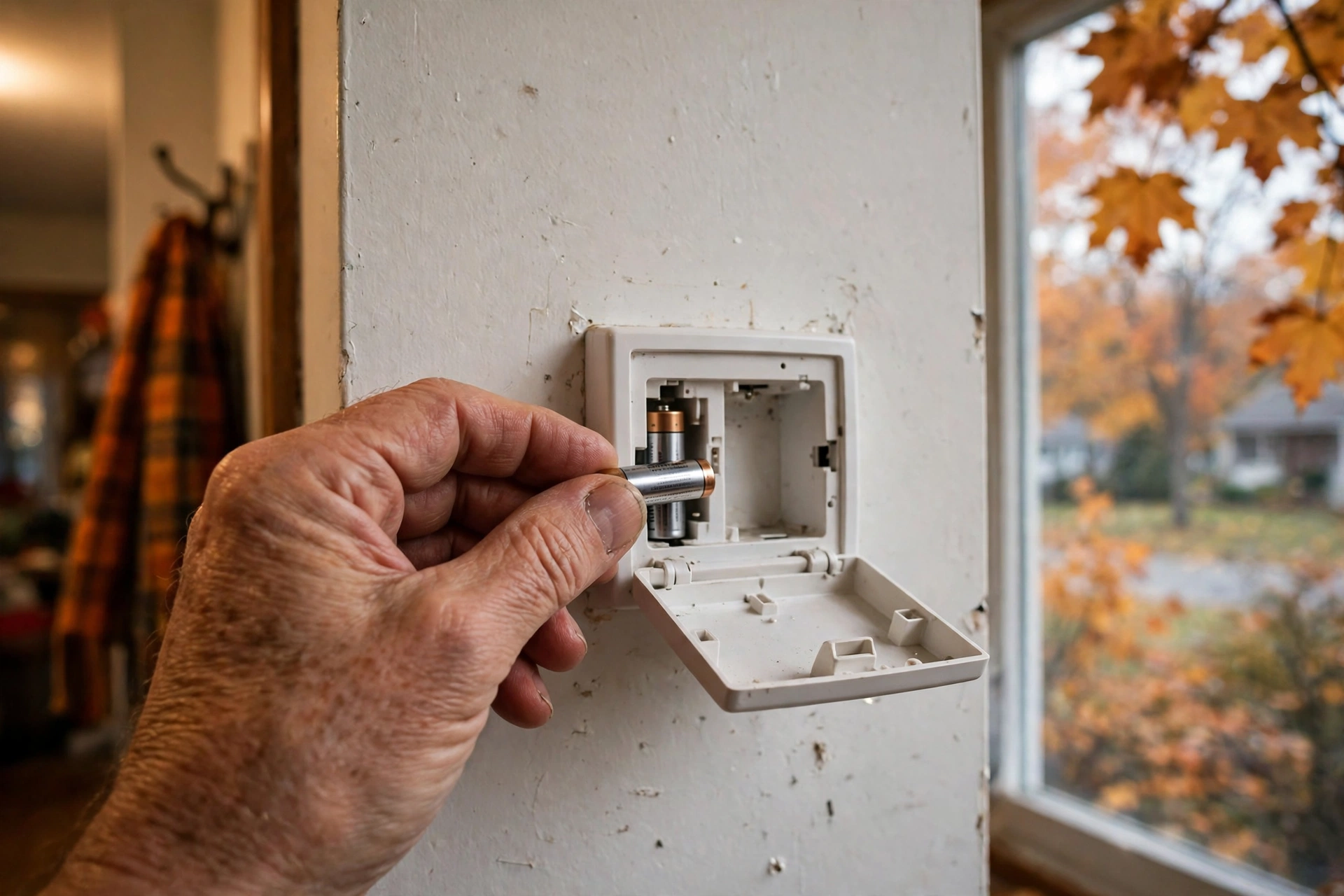
Thermostat batteries are the smallest October fix, and the one most often missed. A blank screen in January looks like a dead furnace, so this check belongs at the top of the list.
Air first: filter, vents, and returns
Airflow is the simplest October win. Pull the filter out and hold it to a light. If you cannot see light through it, replace it with the size your furnace manual calls for, and slide it in facing the right direction. A filter that is too small, too thick for the system, or installed backwards can choke airflow just as surely as a dirty one. Keep a spare on hand, because January is a poor time to discover you are out.
Next, walk every room and open supply registers and return grilles. Move furniture, rugs, and storage boxes off them, and check basement runs for crushed or disconnected duct sections. A register closed for summer in a spare room can stay closed all winter by accident, and the rooms beyond it will run cold. Vacuum dust from grille faces, and listen for whistling at any register, which often points to a blocked or pinched duct. Good airflow protects the heat exchanger, keeps rooms even, and stops the short cycling that wears parts out.
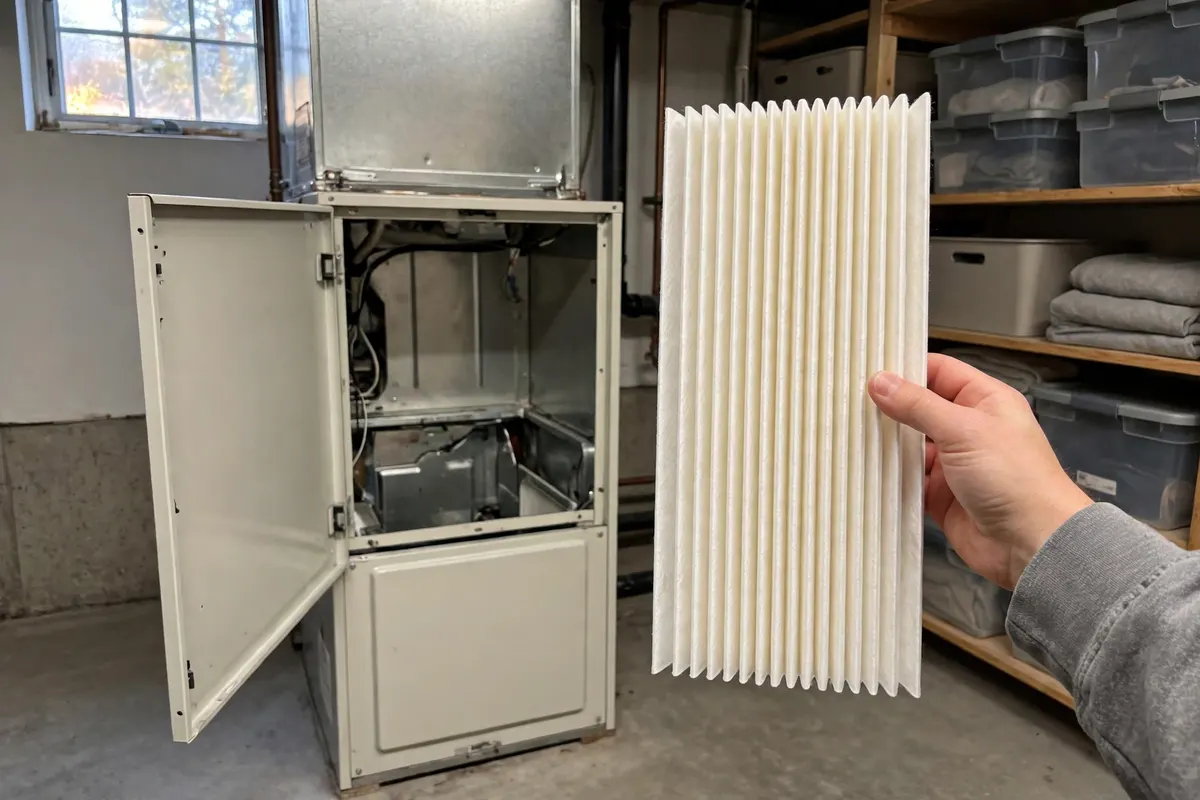
A clean filter is the easiest October win. Hold the old filter to a light, and if light barely passes through, swap in the size your furnace manual calls for before the first freeze.
Flame, blower, and safety controls in plain view
With the furnace running, stand near it and listen. A healthy start sounds like a fan, then a burner lighting cleanly, then the blower moving air. A loud boom at lighting, a squeal from the blower, or a rattle that was not there last winter all deserve a note and a call. Do not open the burner compartment or touch wiring to investigate. Your job in October is to notice and report, and a technician handles the inside of the unit. See Grand Chute furnace help.
Check the safety items you can see without opening panels. Carbon monoxide detectors near bedrooms and near the furnace area should be present and tested, and any detector past its working life should be replaced. Look at the area around the furnace and keep boxes, paint cans, and laundry away from it. A furnace needs clear air around it to run safely, and a crowded furnace corner also makes service slower. If you smell gas at any point, leave the house and call for help from outside, and do not switch lights or appliances on the way out.
| October check | You can do it | Call a technician for it |
|---|---|---|
| Thermostat start test | Yes | If the screen stays blank after batteries and power checks |
| Filter change | Yes | If the filter slot is damaged or the size is unclear |
| Vent and register walk | Yes | If a duct run is crushed or disconnected |
| Flame and burner inspection | No | Yes, every time |
| Heat exchanger and safety controls | No | Yes, every time |
Outdoor vents and the condensate path
Step outside and find the vent pipes for a high efficiency gas furnace, usually white plastic pipes through a side wall. Clear leaves, mulch, and stored items away from the ends, and note where snow tends to drift against that wall. A drift that buries a vent in January will shut the furnace down, so October is the time to plan a clear path and a habit of checking that wall after storms. The National Weather Service office in Green Bay posts winter storm guidance for our area, and its forecasts help you time that check after a heavy snow.
Inside, look for the condensate drain line if your furnace has one, and check for water pooling or a damp floor near the unit. A slow drain in October becomes a shutdown in January when cold air freezes a line that runs through a cold space. Do not pour chemicals down the line, and do not disconnect it to test it. Note any dampness, any musty smell near the furnace, and any water stain on the floor, and pass those notes to your technician. Small drainage faults are quick work in October and miserable work in a cold snap.
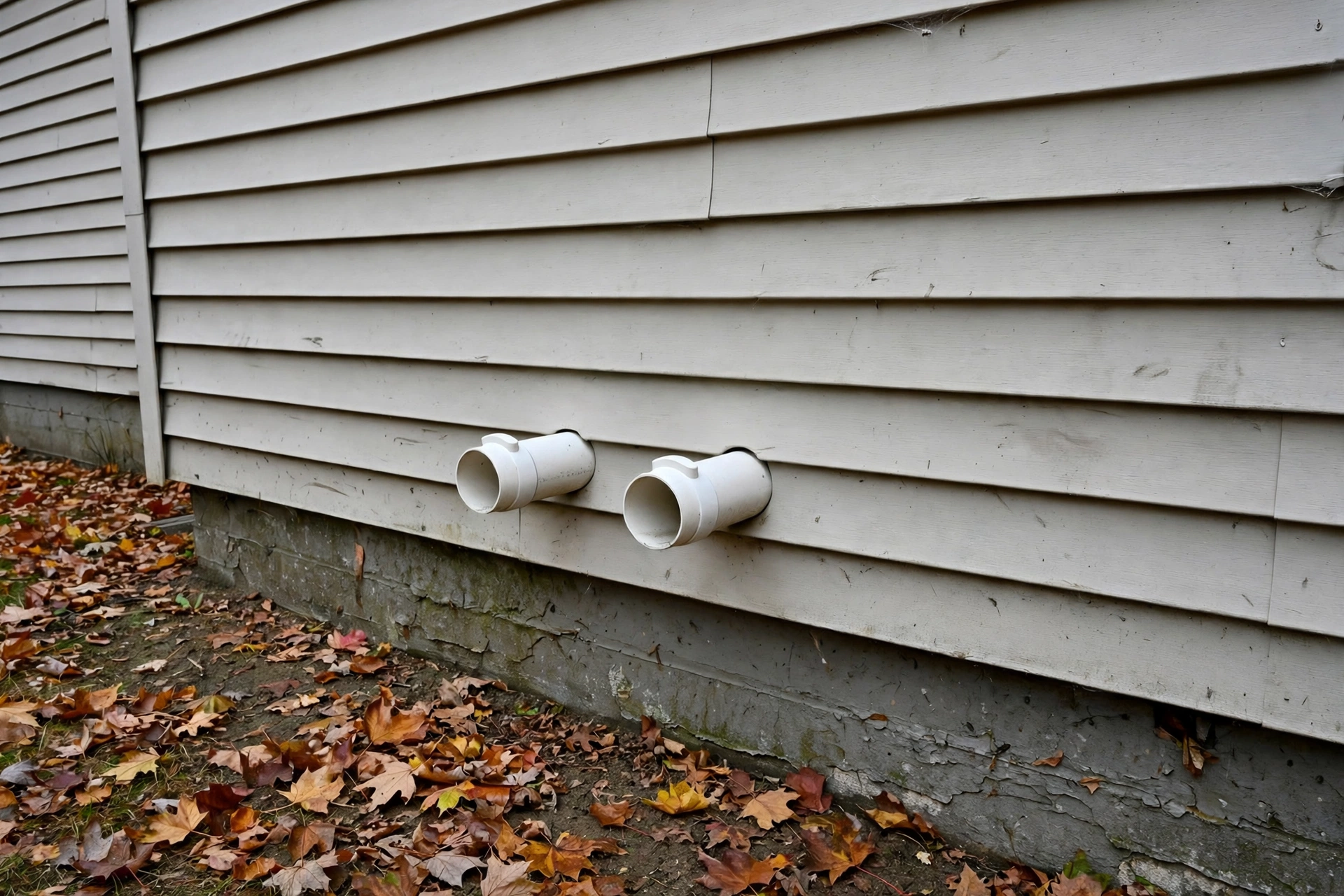
The vent wall in October should look like this: both PVC pipes open, with leaves and shrubs cleared back. Anything pressed against the openings can choke the furnace on its first long run.
Rooms, drafts, and the first cold week plan
Finish the checklist inside the rooms you live in. Feel for drafts at windows and doors, and note the worst ones for sealing before winter. Drafts do not mean the furnace is broken, but they raise its workload, and a drafty house will feel cold even when the furnace runs well. Close storm windows if you use them, and check that attic access hatches and basement doors close properly. These small seals help every room hold heat, and they help the furnace cycle less often through the season.
End October with a simple cold week plan. Keep a spare filter, a flashlight, and our number where you can find them in the dark. Know where the furnace switch and breaker are, and know which rooms have pipes on outside walls. When the first freeze arrives, run the furnace early in the day, listen for anything new, and call while the problem is small. A checklist only works if you act on what it finds, and October gives you time to act calmly.
October checklist in order
If you want the whole checklist as one short sequence, work through it in this order, and stop at the technician steps when you reach them. Controls and air come first, since they are safe and simple, and flame, venting, and safety checks follow, with a technician handling the inside of the unit.
Test the thermostat
Set heat, raise the setting, and listen for a steady start.
Change the filter
Swap a clogged filter for the size your manual calls for.
Open vents and returns
Clear registers and returns of furniture and stored items.
Check the vent wall
Clear leaves and snow from outdoor vent pipe ends.
Walk the rooms
Note rooms that lag and drafts that need sealing.
October checklist done, but something sounded off?
Tell us what you found, room by room, and we will help you decide what needs a visit before winter.
Call (920) 523-4330 Contact usMore October questions from Fox Valley homeowners
When should I turn my furnace on for the first time in fall?
Turn it on during a mild October day, well before the first freeze, so you can test it calmly. Set the thermostat to heat, raise it a few degrees, and listen for a steady start with warm air in the rooms. A test run in October reveals ignition, airflow, and venting trouble while repairs are still comfortable to schedule.
What does a fall furnace check actually include?
A fall visit checks ignition, flame sensing, blower condition, safety controls, venting, and condensate drainage, plus airflow through the ducts and registers. The technician also looks for wear that could fail under winter load. You can handle filters, vents, and thermostat tests yourself, and the inside of the unit belongs to the technician.
Why does my furnace smell dusty on its first fall start?
Dust settles on the heat exchanger and in the ducts over summer, and the first hot run burns that dust off. The smell usually fades within a day. A gas smell means leaving the house and calling for help from outside.
What the October parts shelf should hold
October is also the month to look at the parts a furnace leans on all winter. A pleated filter made of fibreglass media, a spare set of thermostat batteries, and a clean flame sensor are small items, but each one prevents a familiar January call. The method is simple: change the filter, test the thermostat call with a multimeter reading where a technician checks it, and note any part that already looks worn, so a fall maintenance visit can deal with it before the freeze.
The vent pipes deserve the same attention. Galvanised steel flues and white PVC direct-vent pipes both need a clear path, and a blocked intake is a common cause of a furnace that locks out after a storm. That fault is covered in our guide to intake and exhaust freeze-ups, and the maker's installation instructions, together with local code, set how far those pipes must sit from windows and corners. Keeping the wall clear is a homeowner job; opening the burner cabinet is not.
| Check | Material or part | When |
|---|---|---|
| Filter | Pleated fibreglass | Monthly in season |
| Vent pipes | PVC or galvanised steel | Clear before storms |
| Thermostat | Batteries or wired | Test the heat call |
First-freeze checklist questions
What is the best month for a furnace check in Appleton?
October is the best month for most Appleton homes. First frost usually arrives around October 1 to 10, so an October visit tests the system before real winter demand. The house stays comfortable during the visit, parts are easier to check, and any repair happens before cold snaps and storm weeks fill the schedule.
Does a furnace filter need changing more often in a Wisconsin winter?
Check the filter monthly through the heating season and change it when it looks gray and clogged. Homes with pets, remodeling dust, or long furnace run times clog filters faster. A clean filter protects airflow and the heat exchanger, and it stops the short cycling that wears out parts.
Should I close vents in rooms I do not use?
Closing too many vents raises pressure in the ducts and can overheat the heat exchanger. Leave most registers open, and close at most one or two in truly unused rooms. If a room stays cold with its vent open, the problem is usually ductwork or airflow, not the vent setting.
Do I need a carbon monoxide detector near my furnace?
Yes, place detectors near bedrooms and in the area of fuel burning equipment, following the detector instructions for height and distance. Test them monthly in winter and replace any unit past its working life. A detector is a safety net, not a substitute for venting checks and regular furnace care.
Why do my vents whistle when the furnace runs?
Whistling usually means air is squeezing through a blocked, pinched, or partly closed duct path. Check for furniture over registers, a crushed basement duct run, or a filter that is too restrictive for the system. If the whistle stays after those checks, a technician should trace the duct path.
What should I do if the furnace will not start on the first cold day?
Check the thermostat setting, the furnace switch, the breaker, and the filter first. Clear snow or leaves from outdoor vent ends if you can reach them safely. Try one reset only if your unit has one. If heat does not return, call us and describe the sounds and lights you see.
Get the October checklist done before the freeze
Run the tests above, write down what you find, and call us about anything that sounded or looked different from last winter.
Call (920) 523-4330 Contact usRelated pages
October is the calm month to find furnace trouble.
Work through the list on a mild day, and call us about anything that does not sound, look, or feel right.
Call (920) 523-4330